The Ulysse Nardin Freak: A Revolutionary Force That Redefined Modern Watchmaking

How a radical timepiece launched in 2001 became the catalyst for an industry-wide transformation, pioneering silicon technology and inspiring a new generation of horological innovation
The Birth of a Revolution
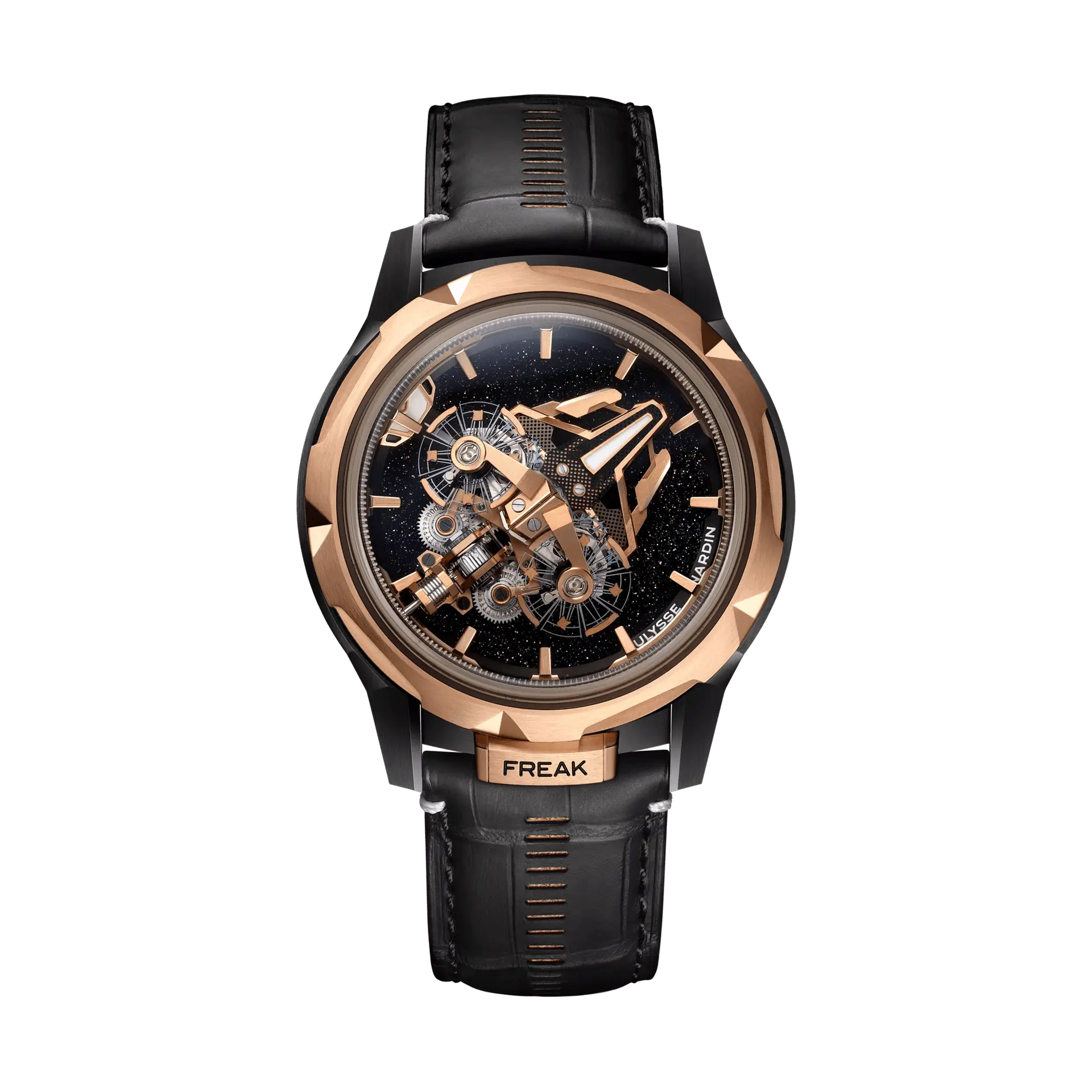
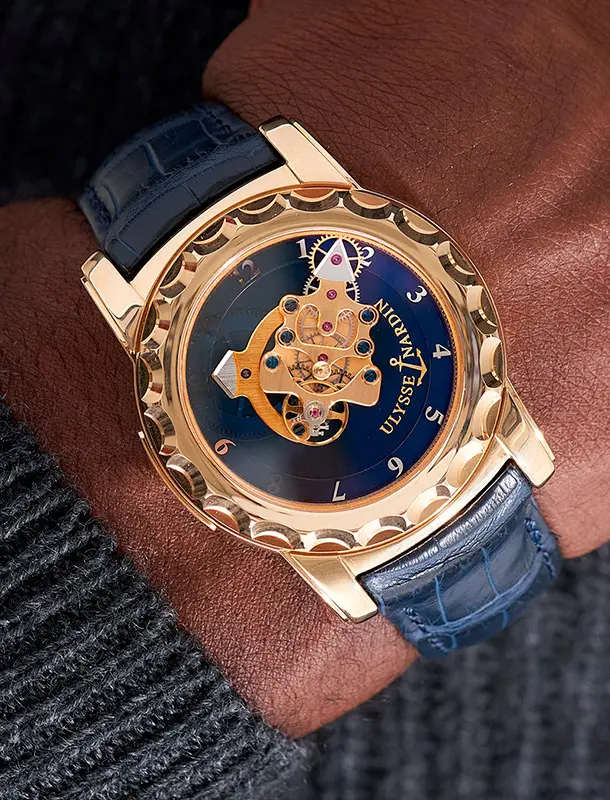
In the annals of horological history, few timepieces have wielded as transformative an influence as the Ulysse Nardin Freak. When this radical watch debuted at Baselworld 2001, it didn’t merely challenge conventions—it obliterated them entirely. With no traditional dial, no hands, and no crown, the Freak represented a complete reimagining of what a mechanical watch could be, setting in motion a chain of innovations that would reshape the entire industry.
The Freak was born from the visionary collaboration between Carole Forestier-Kasapi, whose original concept won the Prix de la Fondation Abraham-Louis Breguet in 1997, and Dr. Ludwig Oechslin, the Vatican clock restorer who transformed her idea into horological reality. Under the direction of Rolf Schnyder, the man who had already saved Ulysse Nardin from near extinction in the 1980s, this unlikely team created what would become the most influential watch of the 21st century.
Breaking Every Rule in the Book
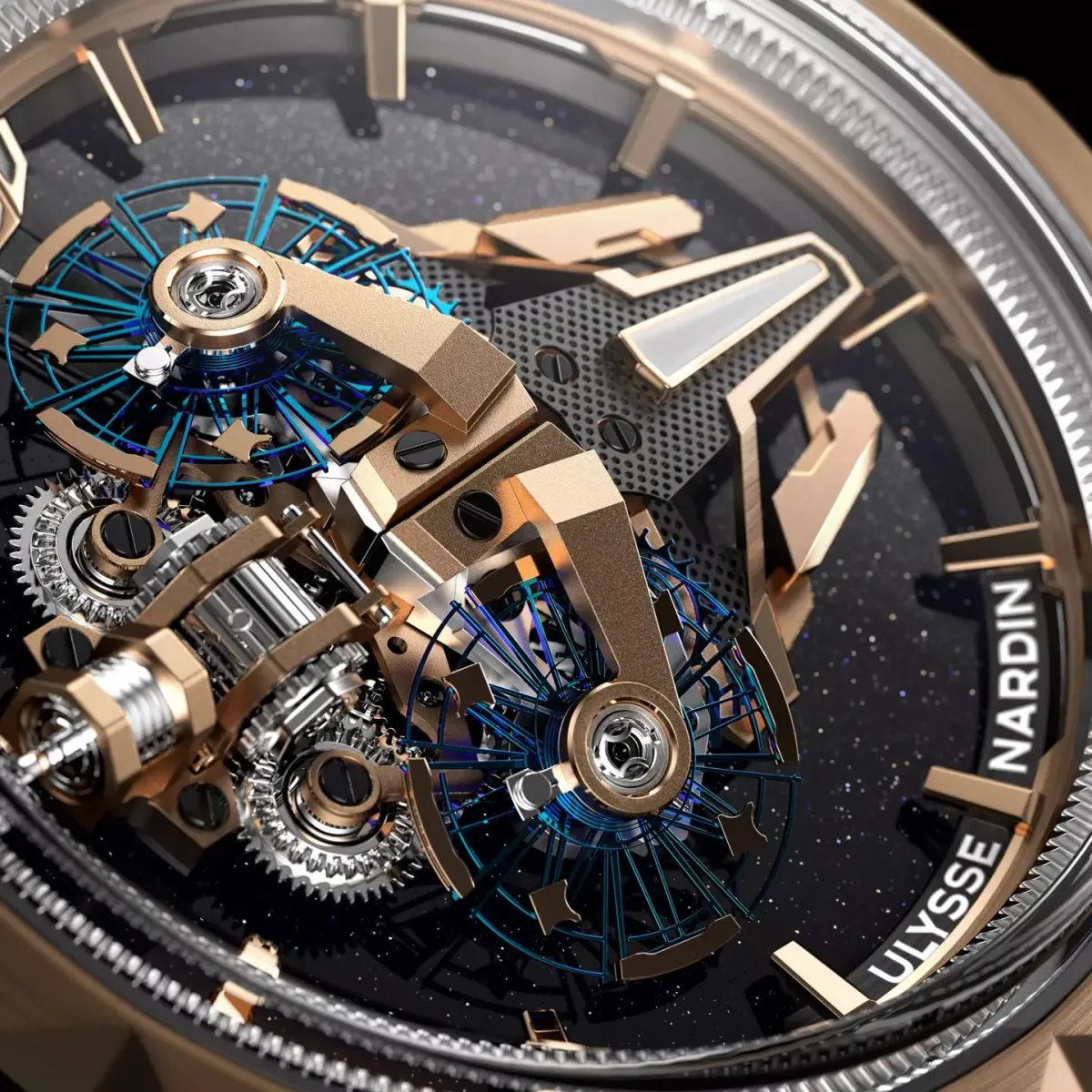
The original Freak was aptly named—it bore little resemblance to anything that had ever graced a wrist. The watch dispensed with centuries-old conventions, featuring a movement that literally became the dial. The entire gear train, mounted on a massive mainspring barrel, completed one full rotation every hour, effectively serving as the minute hand. Meanwhile, a bridge acting as the hour hand indicated the hours against a peripheral track.
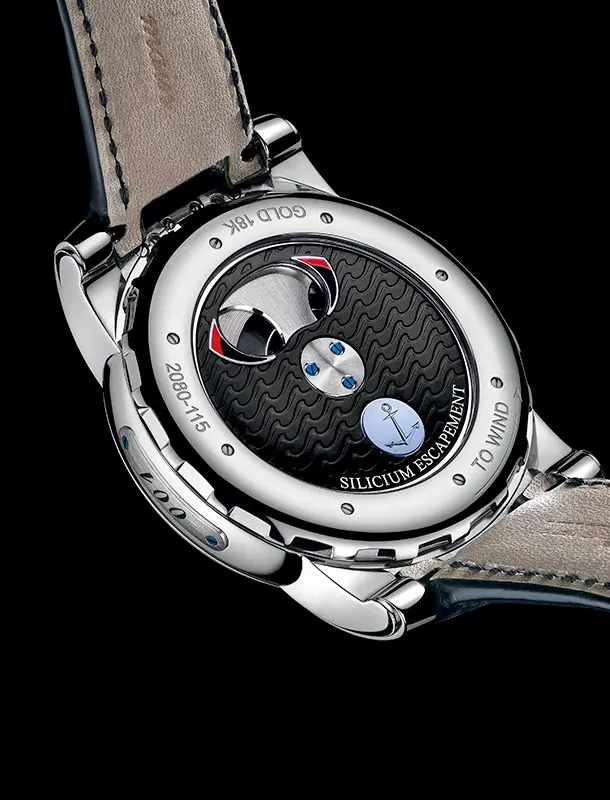
This revolutionary architecture eliminated the need for traditional hands and a crown. Instead, the mainspring was wound by rotating the caseback, while time was set by turning the bezel. The watch represented the first instance where a movement was deconstructed to express time independently, creating an entirely new aesthetic language that would come to define much of contemporary independent watchmaking.
The Silicon Revolution Begins
Perhaps even more significant than its radical design was the Freak’s introduction of silicon components to mechanical watchmaking. The watch featured the first-ever natural escapement in a wristwatch—a design originally conceived by Abraham-Louis Breguet in 1789 but never successfully implemented due to manufacturing limitations of the era.
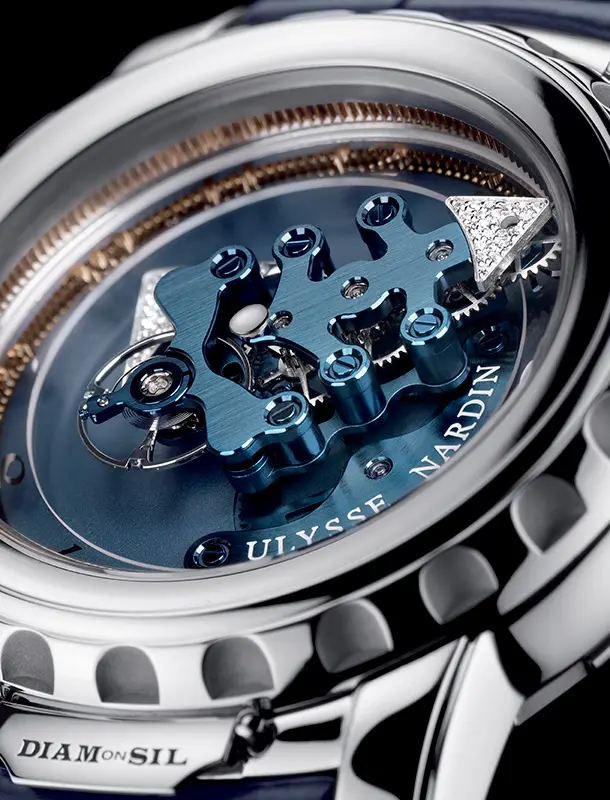
The Ulysse Nardin Dual Direct Escapement solved Breguet’s tolerance issues by replacing traditional metal components with precisely formed silicon parts produced via deep reactive ion etching (DRIE). This breakthrough was achieved in partnership with the Centre Suisse d’Electronique et Microtechnique (CSEM), marking the beginning of the silicon age in watchmaking.
Silicon’s properties proved revolutionary for horology: it operates with low inertia, requiring less energy to move; it’s harder than steel with a completely smooth surface, eliminating the need for lubrication; it can be fabricated with extreme precision in complex geometries; it’s highly elastic and shock-resistant; and it’s completely anti-magnetic. These advantages would soon make silicon components ubiquitous across the industry, from Rolex to Patek Philippe.
Evolution Through Innovation: The Freak Family Tree
Second Generation: Freak 28’800 V/H (2005)
The evolution continued with the Freak 28’800 V/H, featuring an upgraded Dual Ulysse Escapement with improved geometry. The new design featured 18 identical shark-tooth-shaped teeth that nested on the edges of a revised stopper, resulting in a more stable mechanism and enabling a higher frequency of 4Hz (28,800 vph).
Material Experimentation: Diamond Heart and DIAMonSIL (2005-2007)
Ulysse Nardin’s experimental spirit led to the Diamond Heart variant, featuring escape wheels and hairspring made from synthetic diamond. While too expensive for mass production, this led to the development of DIAMonSIL—diamond-coated silicon that combined silicon’s beneficial properties with diamond’s superior surface hardness.
The Vision of Tomorrow: InnoVision Concepts (2007-2017)
The InnoVision series showcased the full potential of silicon technology. The InnoVision 1 demonstrated three-dimensional silicon components and eliminated the need for jewels entirely. The InnoVision 2 pushed boundaries further with its Dual Constant Escapement, silicon balance wheel with micro-blades, and the revolutionary Grinder automatic winding system—twice as efficient as conventional automatic mechanisms.
Commercial Success: From Cruiser to Vision (2013-2018)
The Freak Cruiser brought water resistance and refined aesthetics, while the FreakLab added a date complication. The Freak Vision successfully commercialized many InnoVision innovations, featuring the first entirely silicon gear train in a production watch and the efficient Grinder winding system.
Recent Innovations: NeXt, S, and ONE (2019-2023)
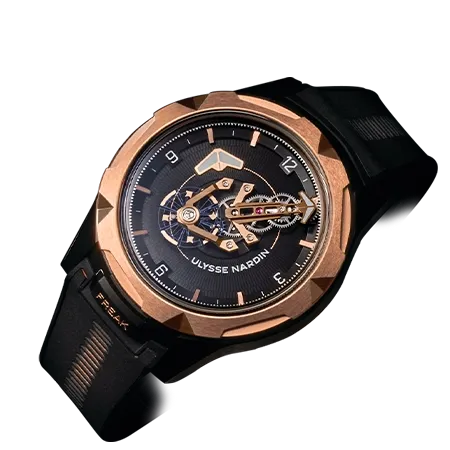
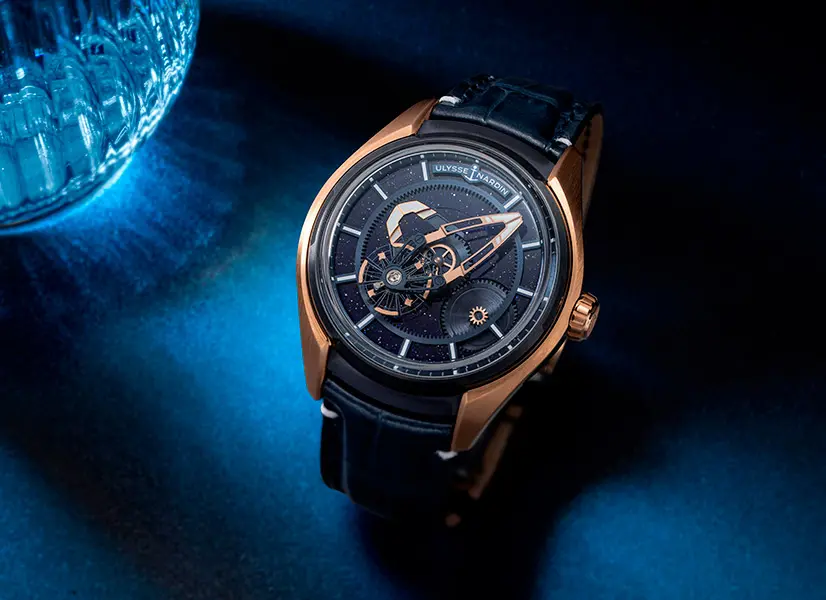
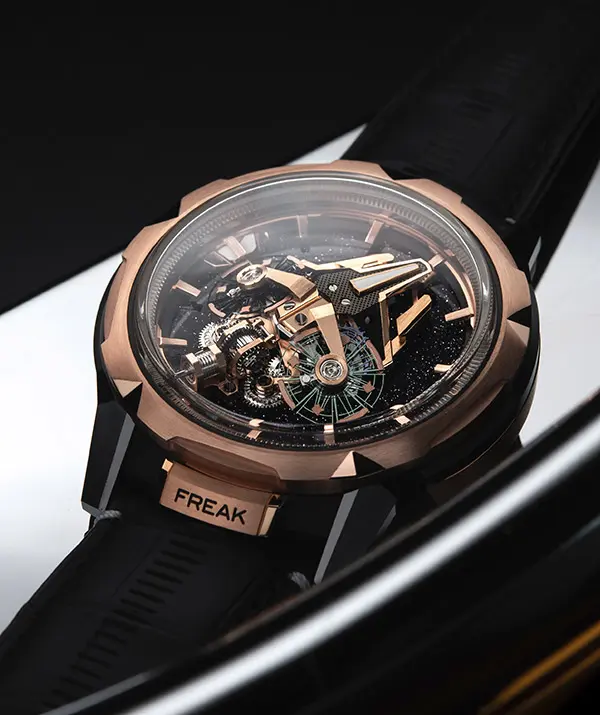
The Freak NeXt achieved an unprecedented 12Hz frequency with its pivotless, floating silicon oscillator. The Freak S introduced dual inclined oscillators connected by a vertical differential. The current Freak ONE represents the culmination of 22 years of innovation, combining DIAMonSIL escapement components with an oversized silicon balance wheel and the proven Grinder winding system.
Industry-Wide Impact: The Freak Effect
The Freak’s influence extends far beyond Ulysse Nardin’s catalog. Today, silicon components are standard across the industry, from Rolex’s new Dynapulse escapement in the Land Dweller to Patek Philippe’s Spiromax hairsprings. The watch’s aesthetic philosophy—celebrating mechanical beauty through transparency and unconventional displays—has inspired countless independent watchmakers and established brands alike.
“The escapement that Rolex has just released in the Land Dweller is heavily inspired by the first direct dual escapement from the Freak in 2001,” notes Matthieu Haverlan, Managing Director of Ulysse Nardin. “Of course, Rolex has improved on it and done it better, and this too is what’s best for everyone—collectors, the industry—to be inspired by the work of another and build on it.”
Beyond direct technical influence, Ulysse Nardin has actively supported industry advancement through strategic partnerships. In 2006, the brand co-founded Sigatec, which specializes in manufacturing silicon and metal micromechanical components for the entire industry. Similarly, their acquisition of Donze Cadrans SA in 2011 made traditional enameling techniques available to competitors, with 90% of production going to other brands.
Future Projections: Where the Freak Leads Next
As we look toward the future, the Freak continues to serve as Ulysse Nardin’s laboratory for horological advancement. Recent developments suggest several key trends:
Material Innovation
The latest Freak models showcase continued material experimentation, from the Carbonium bezels made from recycled IMOCA sailboat foils to Nylo components created from recycled ocean netting. The recent Freak X Crystalium demonstrates ongoing exploration of novel materials, featuring a unique crystallized ruthenium disc.
Collaborative Innovation
The groundbreaking UR-Freak collaboration with Urwerk represents a new model for horological innovation, combining Ulysse Nardin’s silicon expertise with Urwerk’s satellite display technology. This partnership suggests future developments may increasingly involve cross-brand collaboration to push technical boundaries.
Accessibility and Refinement
The Freak X line demonstrates the brand’s commitment to making Freak technology more accessible while maintaining its innovative edge. Future iterations will likely continue this trend, bringing advanced materials and complications to broader audiences.
Sustainability Focus
Ulysse Nardin’s emphasis on sustainable materials in recent Freak models—from recycled carbon fiber to ocean plastic—suggests environmental consciousness will play an increasingly important role in future developments.
The Freak Mentality: A Philosophy for the Future
Perhaps the Freak’s greatest contribution isn’t any single technical innovation, but rather the mindset it represents. As Haverlan explains, “To me, we are the oldest watchmaking startup. When you look back further than Schnyder to the founding family, they were visionaries and pioneers from the beginning—they were what Formula 1 is to the automotive industry or what SpaceX is in terms of space exploration.”
This “Freak mentality” has taught the industry that tradition and innovation need not be mutually exclusive. By respecting horological heritage while fearlessly pushing boundaries, Ulysse Nardin has shown that mechanical watchmaking can remain relevant and exciting in the digital age.
The brand’s independent status, achieved in 2022 when it separated from Kering, positions it perfectly for continued innovation. “Being independent means the ability to have a long-term vision,” Haverlan notes. “We prioritize brand equity over short-term revenue, and we are proud to set that example in the industry with what we create.”
Conclusion: The Freak’s Enduring Legacy
Twenty-five years after its debut, the Freak remains as relevant and revolutionary as ever. Its influence permeates every corner of the watch industry, from the silicon components now standard in haute horlogerie to the aesthetic codes that define contemporary independent watchmaking.
More than just a timepiece, the Freak represents a philosophy—that watchmaking should be forward-thinking, experimental, and unafraid to challenge convention. As the industry continues to evolve, the Freak’s legacy serves as both inspiration and roadmap for future innovation.
In an era where mechanical watches compete with smartwatches and digital devices, the Freak proves that traditional craftsmanship can not only survive but thrive through bold innovation. It stands as a testament to the power of visionary thinking and the endless possibilities that emerge when tradition meets technology.
The Freak didn’t just change watchmaking—it saved it, proving that mechanical timepieces could be more than nostalgic artifacts. They could be glimpses into the future, celebrations of human ingenuity, and works of kinetic art. In doing so, the Freak ensured that the ancient craft of watchmaking would remain vibrant and relevant for generations to come.