The Bovet Battista Tourbillon, Worth Revisiting


This is not a new timepiece, but it is one that deserves renewed attention.
The Bovet Battista Tourbillon was created with Automobili Pininfarina, and the collaboration still stands out because it was built with a clear idea rather than a loose automotive theme. Bovet used the Battista hyper-GT as a design and engineering reference, then translated that language into a watch that feels considered from every angle. For collectors, that kind of coherence is often what gives a piece lasting interest.
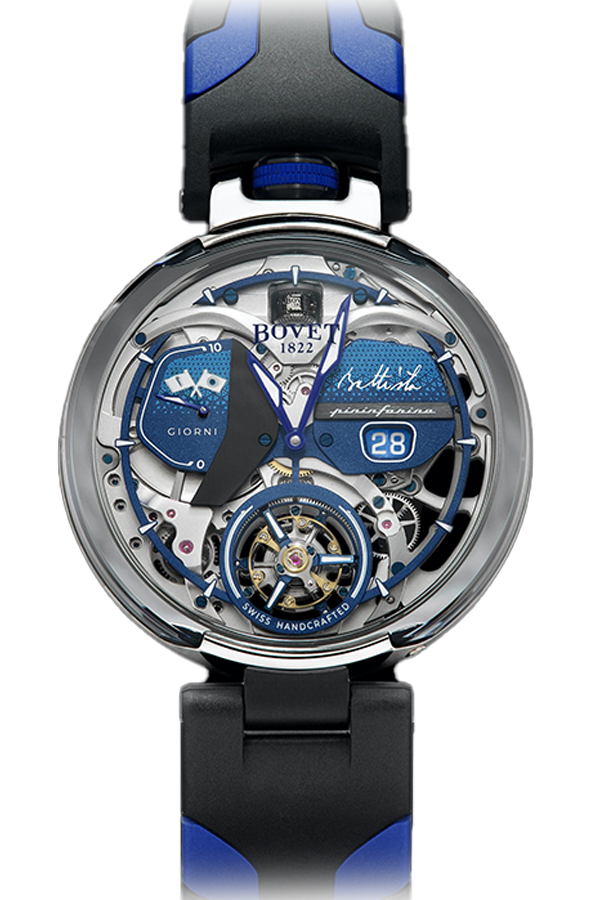
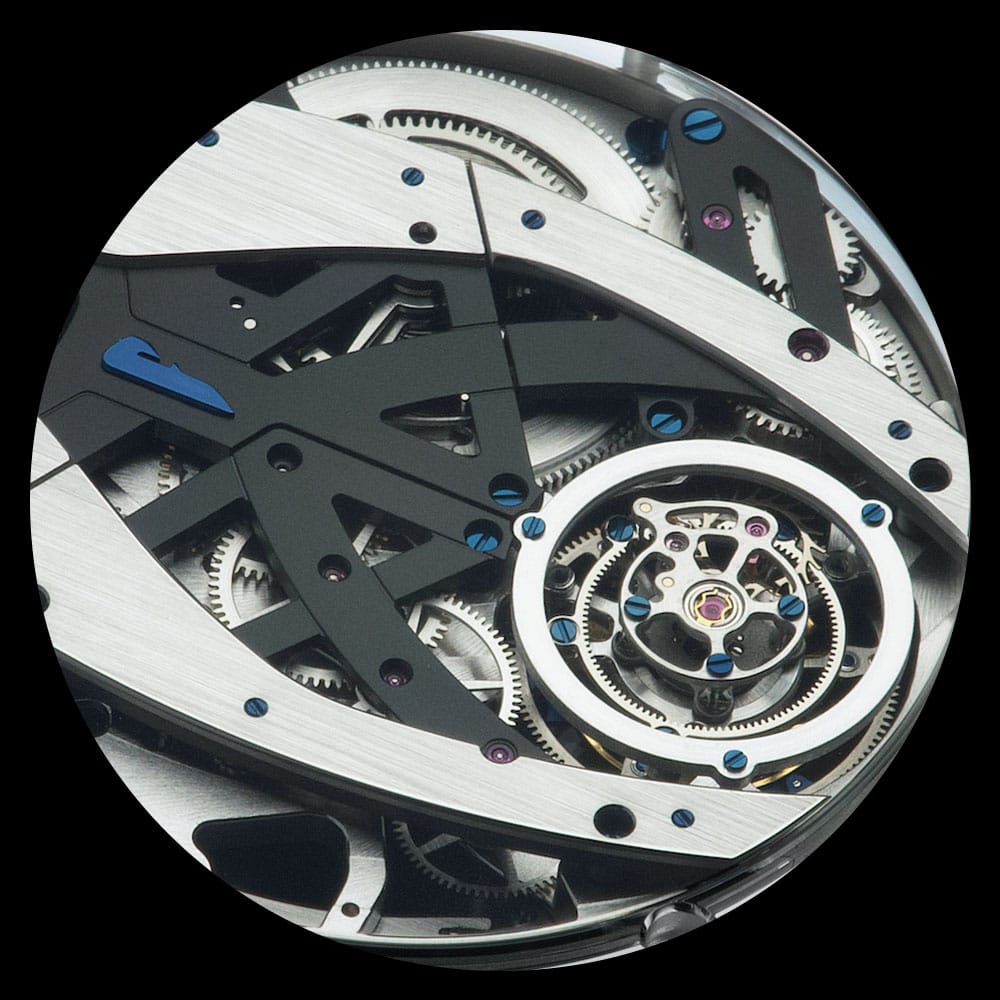
The movement is where the watch earns its place. Bovet’s patented double-sided 60-second flying tourbillon sits at the center of the design, supported by a new movement architecture, a big date display, and a 10-day power reserve. These are not decorative specifications. They give the watch real horological substance, and they make it more than an exercise in styling.
The skeletonized construction reinforces that impression. The watch is meant to be read as a mechanical object, with depth visible across the dial side, caseback, and exposed structure. That openness suits the subject matter. A hyper-GT is not about concealment, and neither is this watch. It presents itself clearly, with enough technical detail to reward closer inspection.
Source: Bovet
At 45.6mm, the case has presence, but the two large sapphire crystals help keep the watch visually light. That balance matters. Pieces like this can easily become overdone, but Bovet avoided that here. The watch has scale, yet it remains legible and well composed.
The dial is one of the most interesting parts of the design. For the first time in Bovet’s nearly 200-year history, the dials are asymmetrical. That is a significant choice, and in this case it works. The two-tone blue surfaces, inspired by Battista’s Triangolo pattern, are shaded from light to dark and arranged to form the number 90, a reference to Pininfarina’s anniversary. It is a thoughtful detail, and it gives the watch a direct visual link to the car without making the connection feel forced.
The E-Heart motif is also used well. On the Battista, it signals charging status. On the watch, it appears in the big date opening and again on the back through Bovet’s patented differential winding mechanism. That kind of functional continuity gives the collaboration more depth. It is not just borrowing a shape — it is adapting a motif into the logic of the watch itself.
That is what makes the Battista Tourbillon worth revisiting now. It was not made to be a passing talking point, and it is not the sort of piece that ages quickly. It has a clear design premise, real mechanical merit, and enough originality to remain interesting even after the initial launch attention has faded.
For collectors, those are the qualities that tend to last.