No Crown, No Compromise: IWC’s Pilot’s Venturer Vertical Drive Is Built for Where Pilots Can’t Go

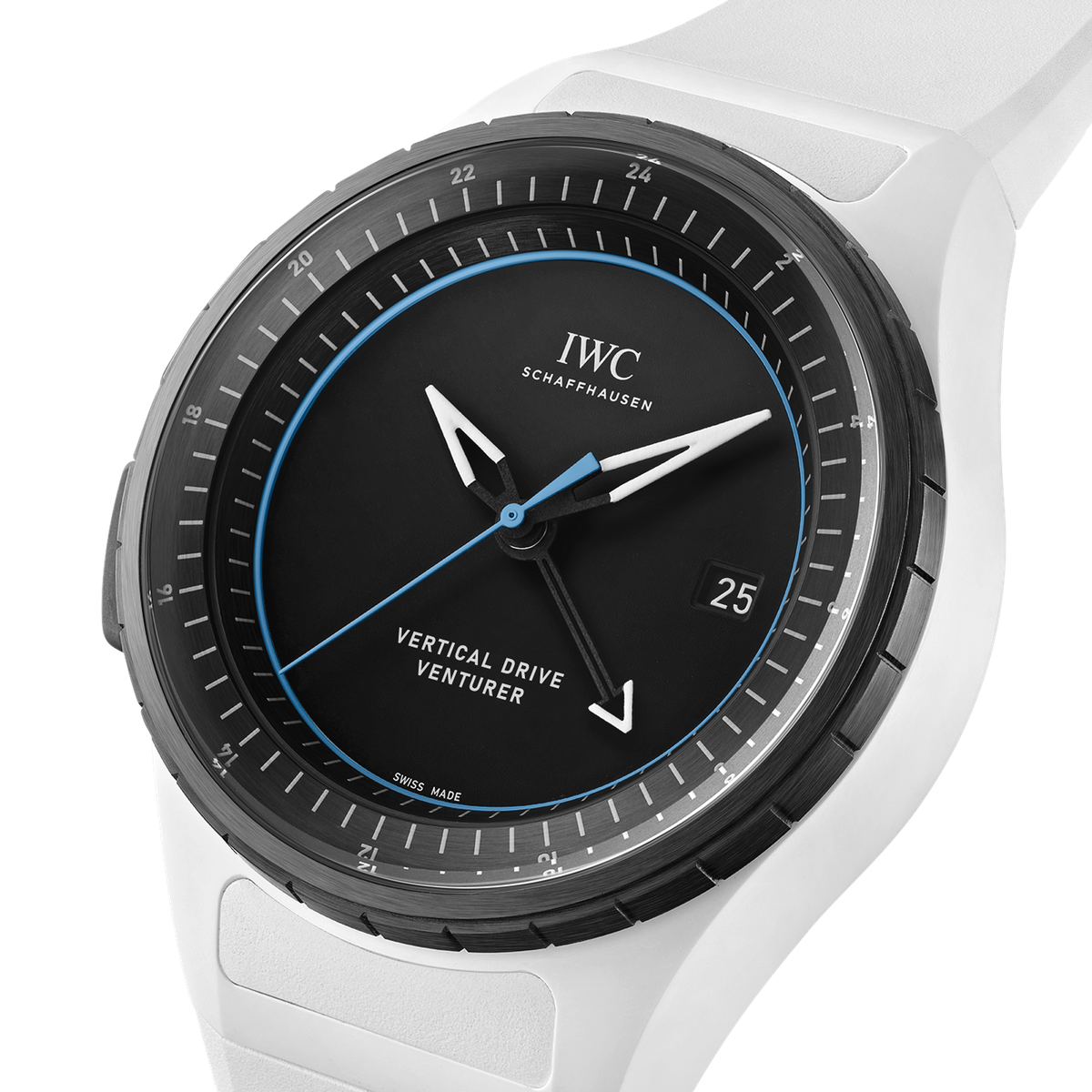
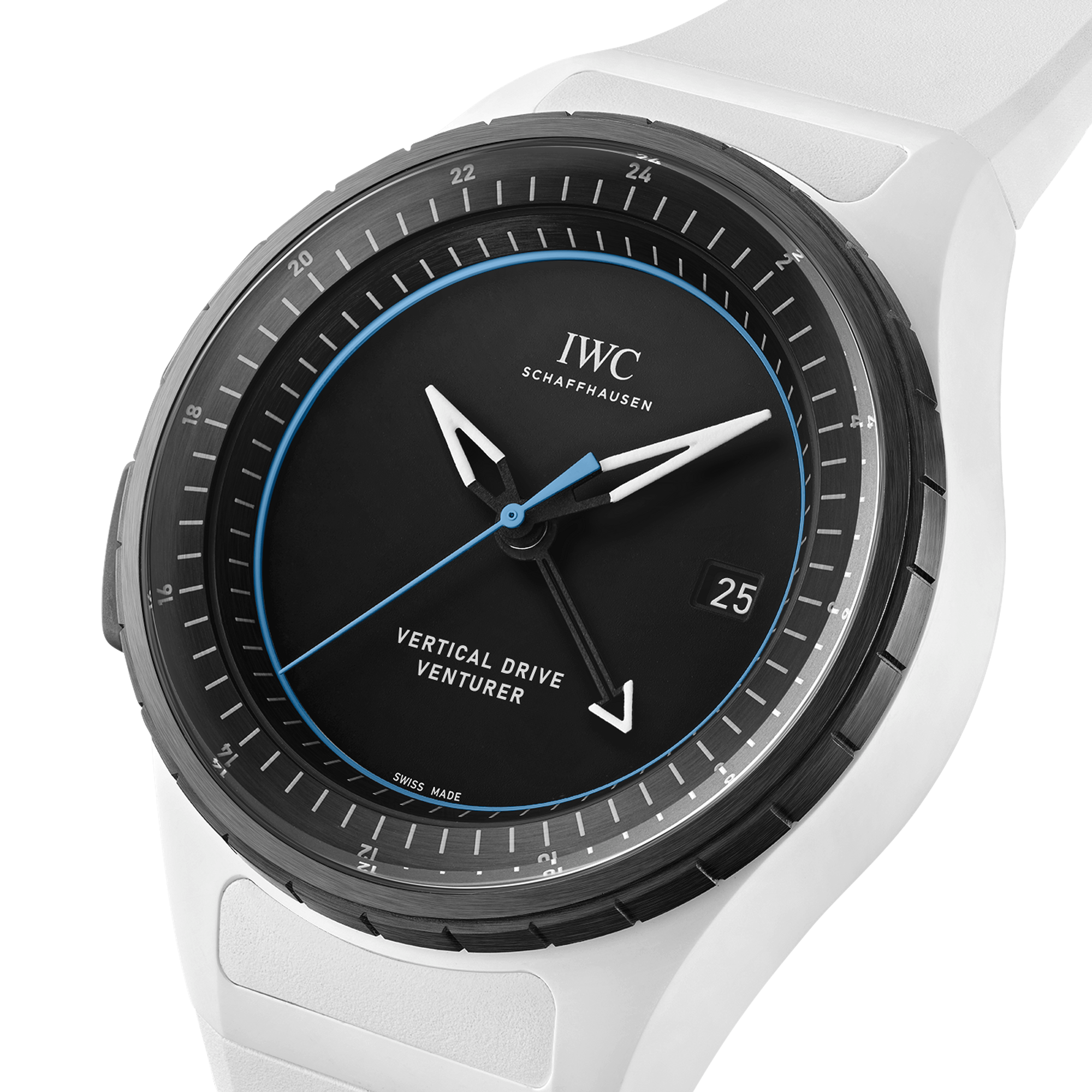
Ninety years of aviation watchmaking, and IWC has finally looked past the atmosphere. The Pilot’s Venturer Vertical Drive (Ref. IW328601) is the brand’s first watch designed specifically for human spaceflight — not adapted from an existing platform, but engineered from scratch around the constraints of working in orbit.
The price is $28,200. The certification is real.
Source: IWC
The Crown Problem
Every mechanical watch has a crown. It’s how you wind the movement, set the time, adjust the date. It also sticks out from the case at three o’clock, which becomes a genuine hazard when you’re wearing a pressurized space suit with gloves thick enough that fine motor control is largely off the table.
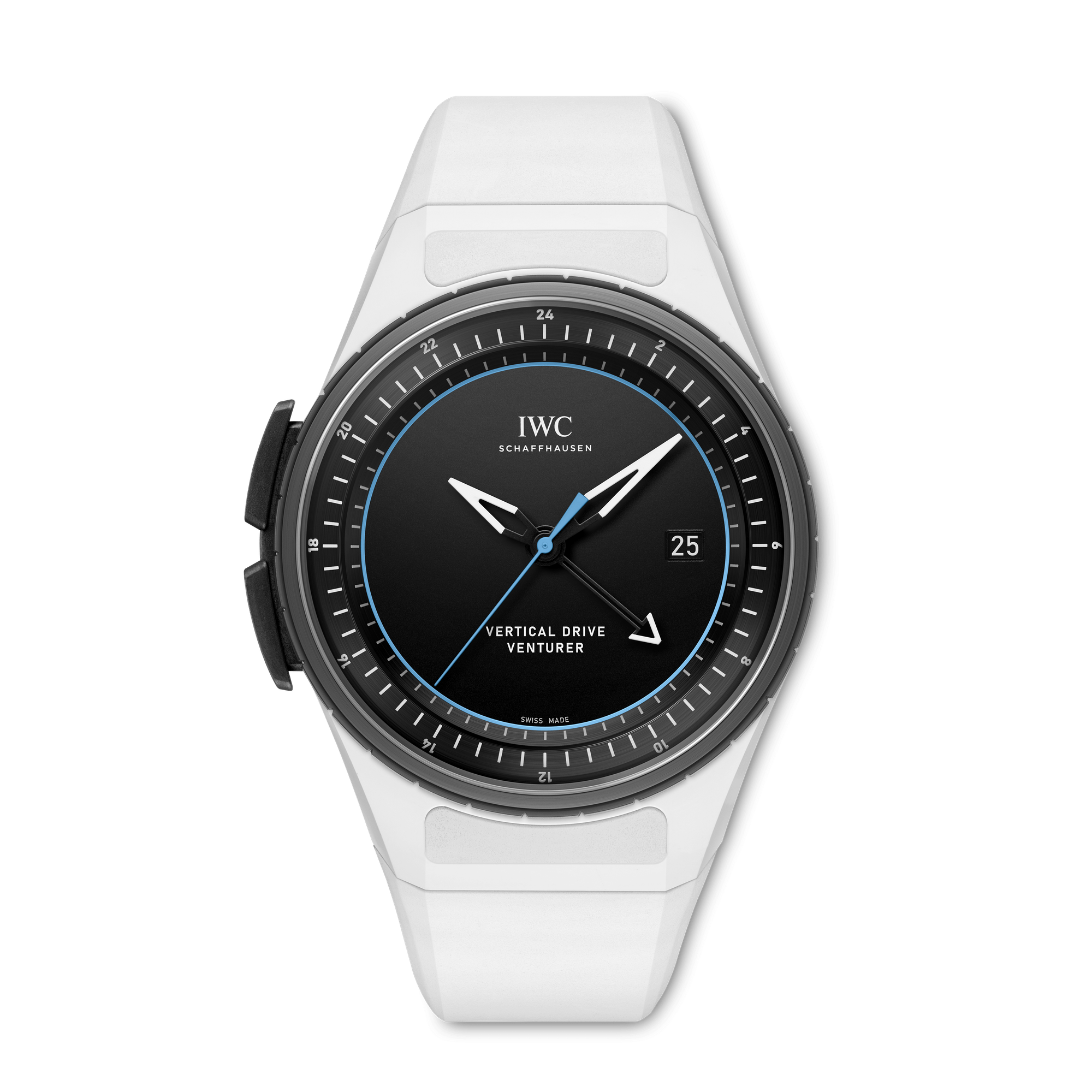
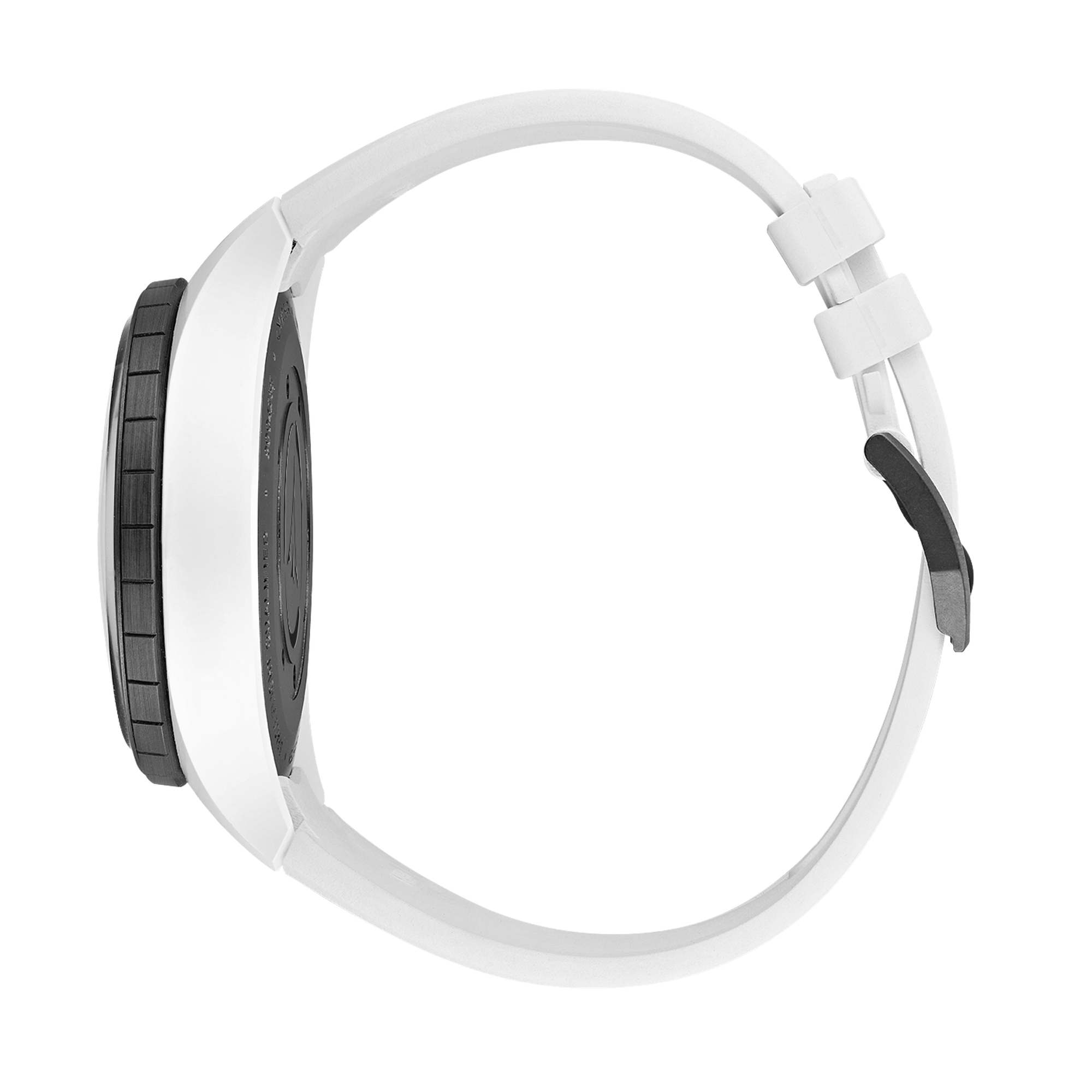
IWC’s solution is a patent-pending rotating bezel system that handles all functions — winding, time-setting, second time zone — without a crown at all. A rocker switch on the side of the case lets the wearer toggle between modes. As IWC’s chief design officer Christian Knoop put it, removing the crown means nothing on the watch can snag on station equipment or a pressurized suit.  It’s a practical fix to a practical problem, and it required building an entirely new interface from the ground up.
Timekeeping in Orbit
A space station orbits Earth roughly every 90 minutes, which means astronauts see up to 16 sunrises and sunsets per day. A standard 12-hour dial oriented around daylight cycles isn’t particularly useful up there.
The Venturer displays a reference time — mission time, typically GMT/UTC — on an outer scale running 00:00 to 24:00, tracked by a dedicated hand. The central hour hand can be independently shifted in one-hour steps to show a second time zone, useful for keeping track of home time during a mission or local time after landing. The dial is matte black with high-contrast markings. There’s nothing on it that doesn’t need to be there.
Materials
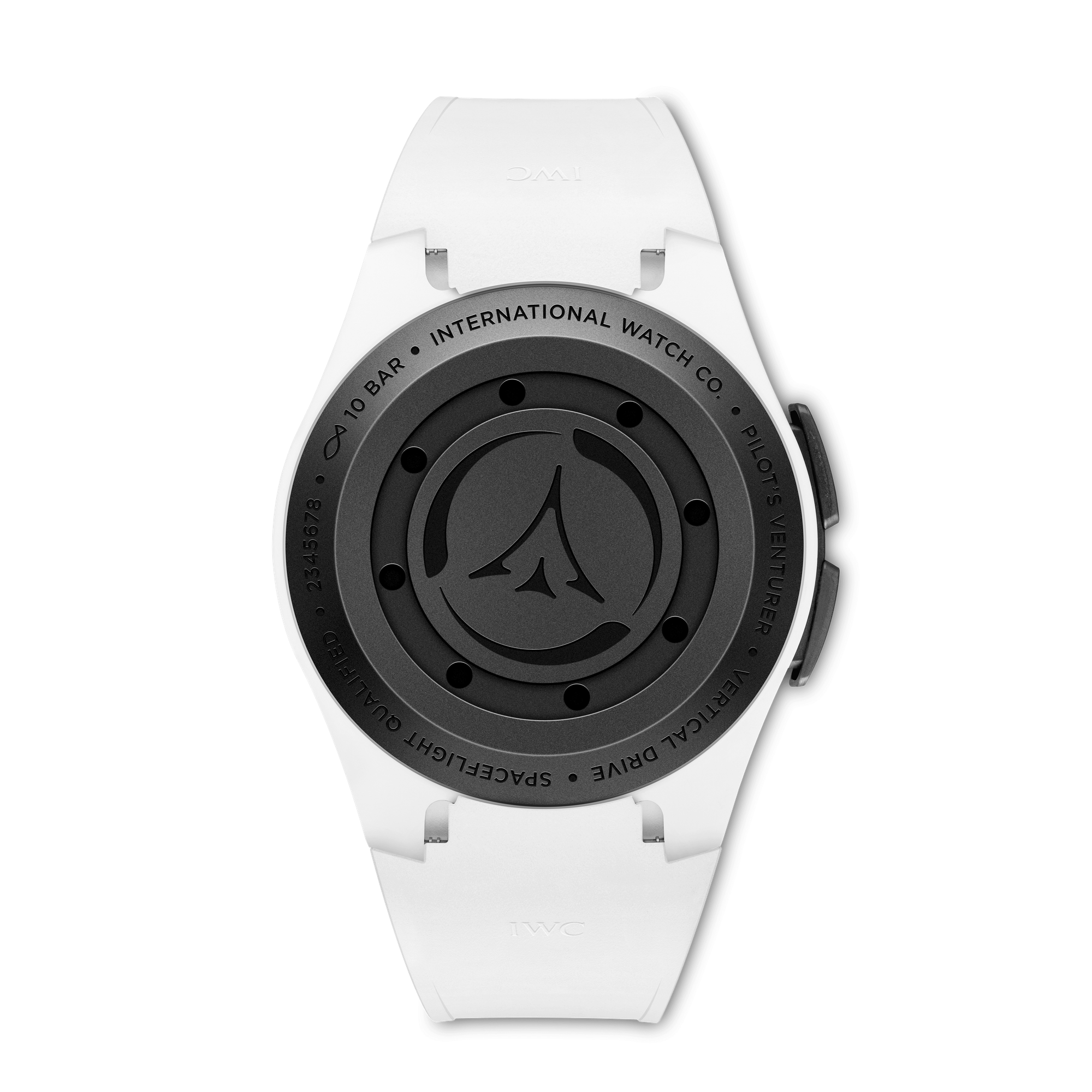
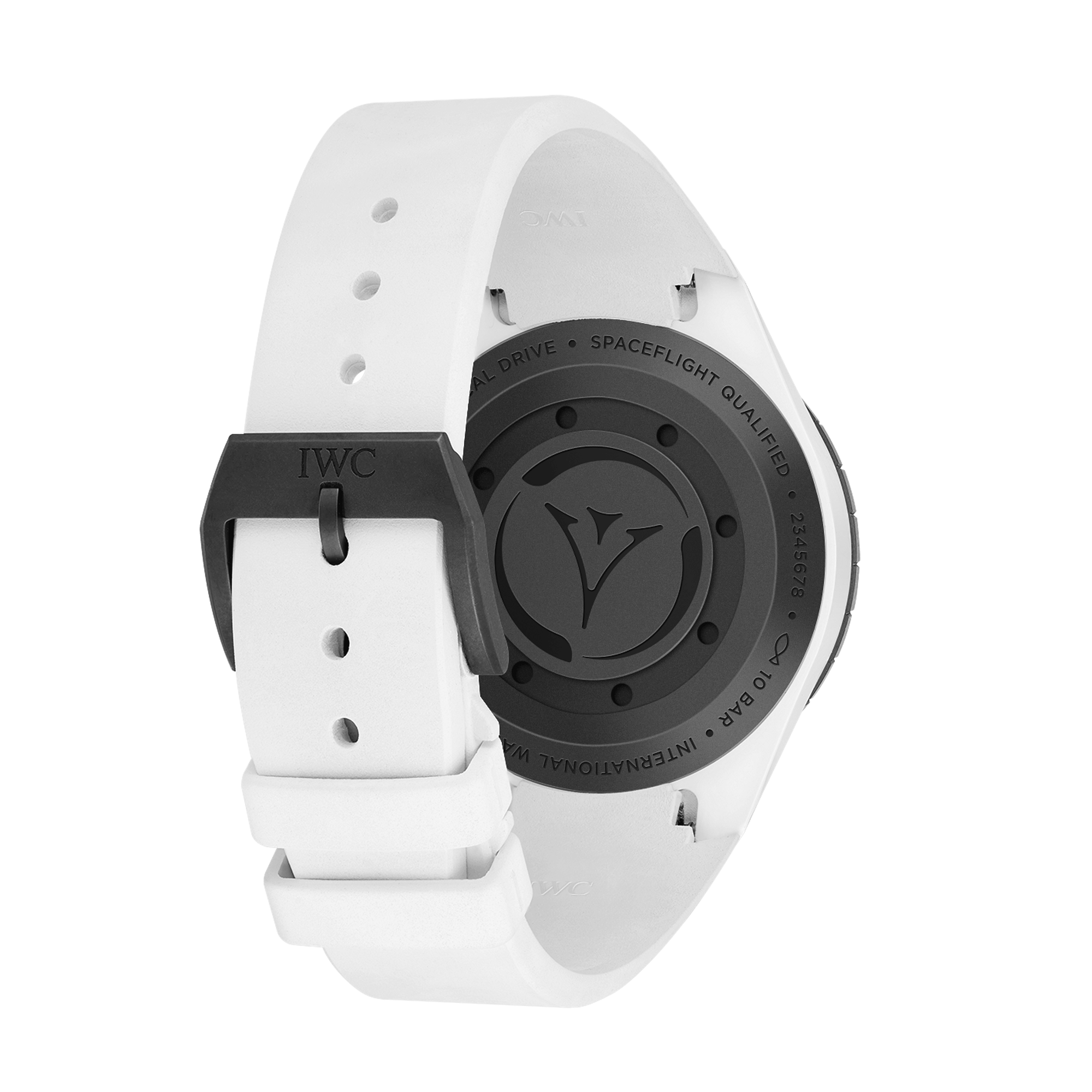
The case is white zirconium oxide ceramic. The rotating bezel and caseback are Ceratanium® — IWC’s material that combines titanium’s low weight with ceramic’s hardness. The strap is white FKM rubber, chosen for thermal insulation and UV resistance.
The material choices follow directly from the environment. In direct sunlight, surface temperatures in orbit exceed 100°C. In shadow, they drop to around –150°C. Conventional metals expand and contract unevenly across that range. Ceramic and Ceratanium® don’t. The white colorway isn’t an aesthetic statement — it’s the thermal logic of a surface that reflects rather than absorbs radiation.
Testing
IWC partnered with Vast, the company currently building Haven-1 — described as the world’s first commercial space station — and the watch was tested at Vast’s Long Beach facility to forces up to 10G, exceeding what astronauts typically experience during launch. It passed. The Venturer carries official spaceflight certification for Haven-1 crew use.
Ten Gs is the number IWC has certified. The page doesn’t go further than that.
Where the Ingenieur Comes In
It’s worth noting that IWC has, elsewhere in its history, produced a watch of almost absurd physical resilience — just in a different dimension entirely.
The Ingenieur 500,000 A/m (Ref. 3508), released in 1989, featured a movement with a niobium-zirconium hairspring that set a world record by surviving a magnetic field of 3.9 million A/m during testing. To put that in context, a hospital MRI runs at roughly 400,000 A/m. An industrial electromagnet capable of lifting cars generates around 795,000 A/m. The 3508 beat both by a wide margin. It was, commercially, a difficult watch — the same alloy that gave it record magnetic resistance made the hairspring sensitive to temperature fluctuation, and IWC eventually discontinued it after producing fewer than 3,000 pieces. But the engineering achievement stands.
The Venturer is rated for the mechanical shock of launch. The 3508 was rated for electromagnetic environments that don’t exist in most of civilian life. Orbital infrastructure — solar flares, charged particle radiation, proximity to electronics-dense station systems — presents both kinds of stress simultaneously. Whether IWC ever chooses to combine those two engineering legacies into a single movement is an open question, but the foundation for it clearly exists within their own history.
The Calibre
Inside the Venturer sits the IWC-manufactured Calibre 32722, a hybrid automatic that can be wound either by the rotor — as in any conventional automatic — or by rotating the bezel, which becomes the primary winding method in microgravity where the natural wrist movement that keeps a standard automatic running simply doesn’t happen the same way. It’s a detail that reflects how carefully the watch was thought through for its actual operating environment rather than its marketing environment.
The Venturer Vertical Drive is a focused, well-reasoned piece of tool-watch engineering aimed at a use case that essentially no other Swiss manufacture has seriously addressed. Whether or not it ever leaves Earth on your wrist, it represents IWC thinking clearly about what a pilot’s watch actually needs to do when the pilot goes somewhere no plane can follow.