Vacheron Constantin's Tribute to the Animal Kingdom: Craft Without Borders

Six outside artisans, six disciplines new to watchmaking.
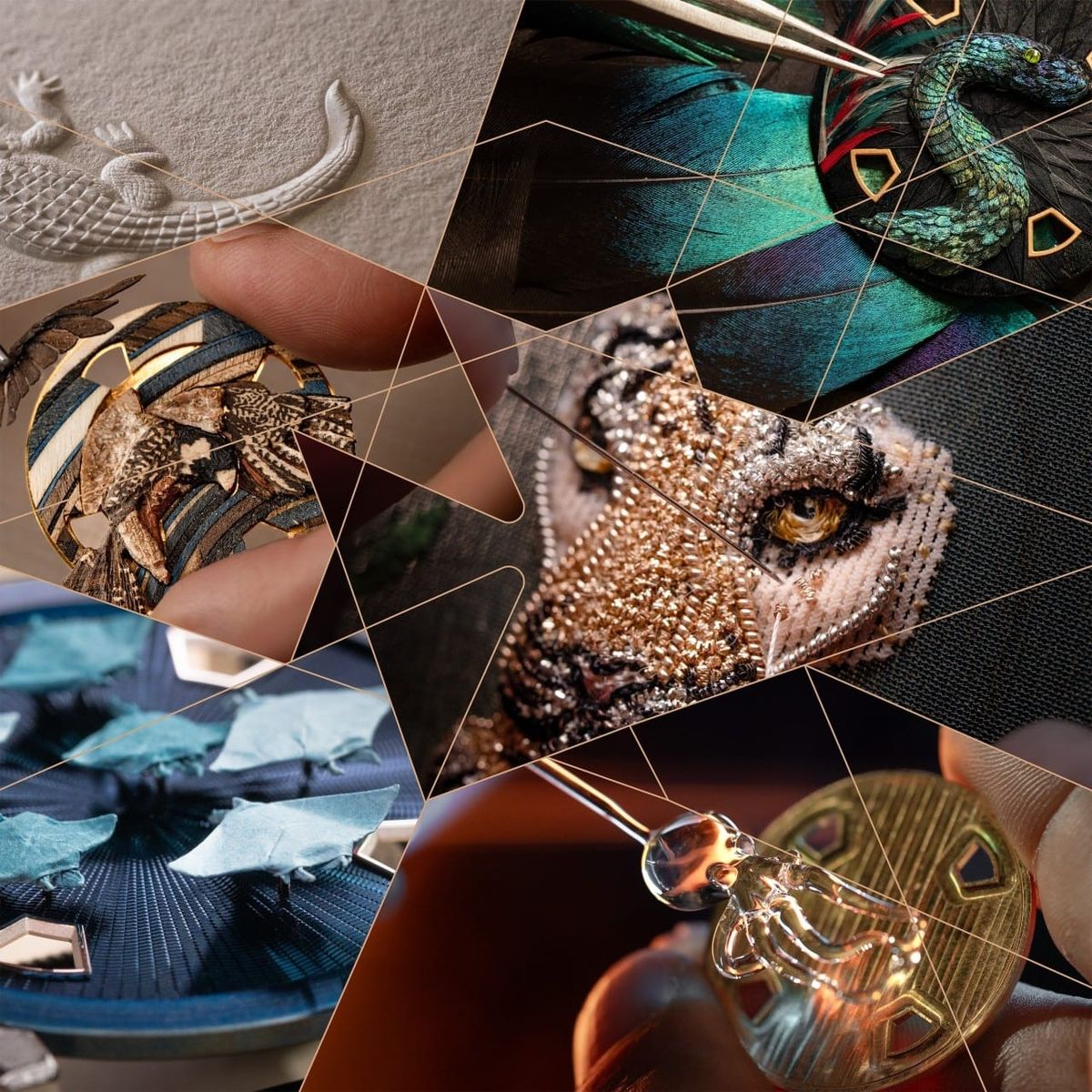
At Homo Faber in Venice this week, Vacheron Constantin unveiled six concept watches under a title that undersells what's actually happening on the dial: Métiers d'Art Tribute to the Animal Kingdom. The premise, staged under the Maison's "One of Not Many Crafts Programme," is simple to describe and genuinely difficult to execute — take six artisans who have never worked in watchmaking, hand each one a wildlife subject, and ask them to translate a craft built for meter-scale canvases onto a dial with less than four millimeters of clearance beneath the crystal.
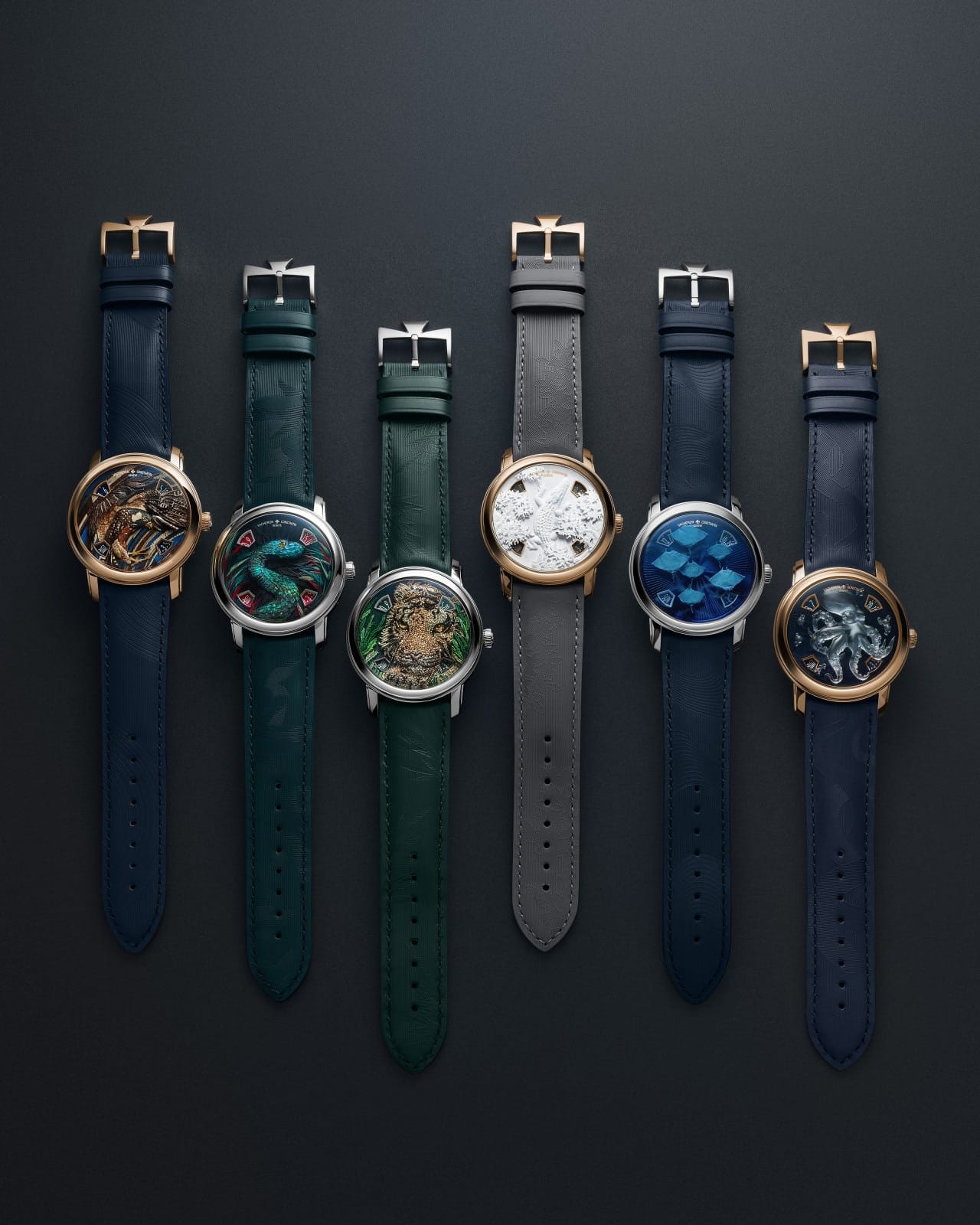
The six results:
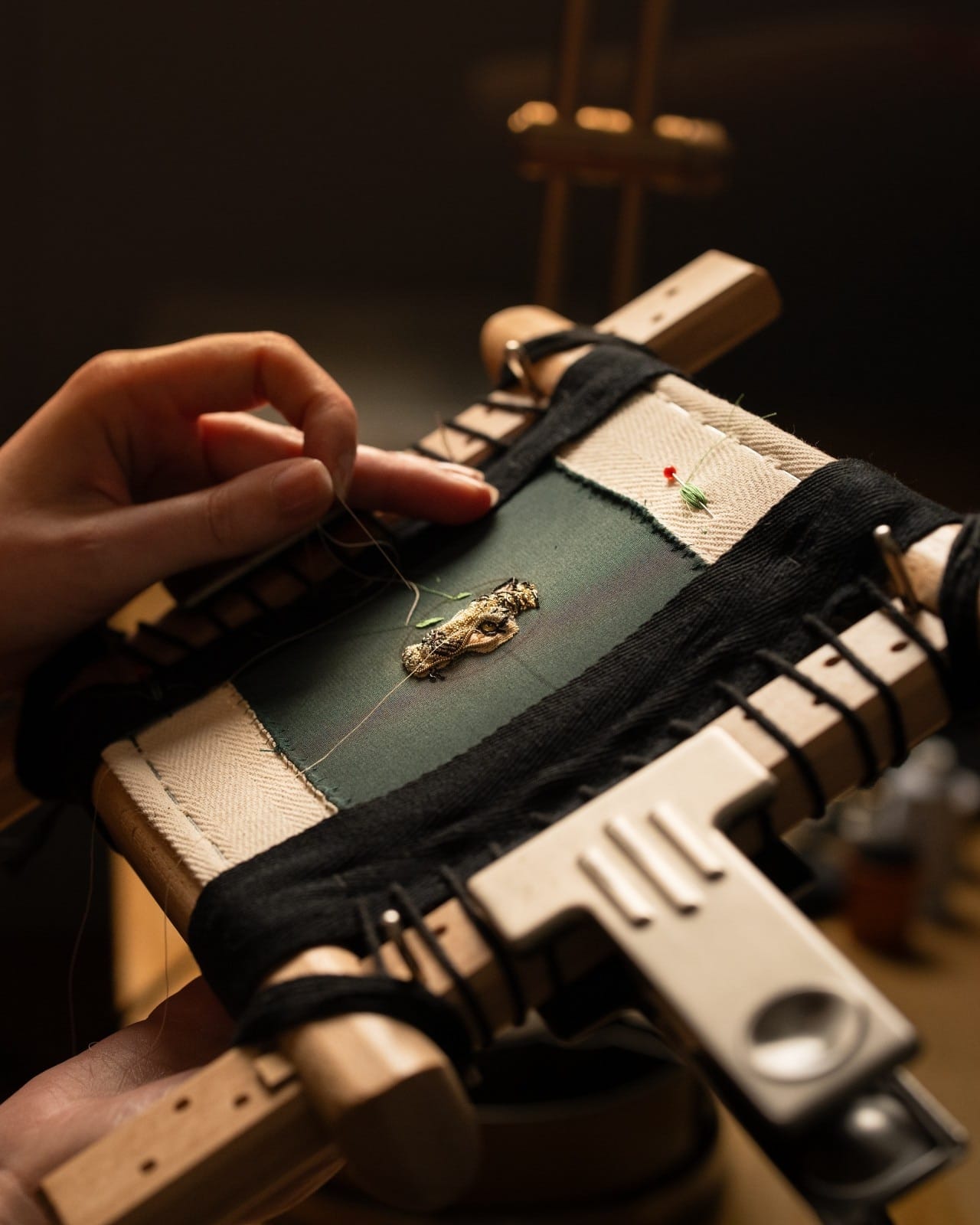
- Tigerbroidery — embroiderer Laura Baverstock builds a prowling tiger from 9-karat yellow and white gold thread, with ceramic-coated copper wire standing in for the black stripes, worked over dyed green silk. The dial reportedly took around 210 hours.
- Papercroc — Marianne Guély embosses and laser-cuts a crocodile from 300 GSM cotton paper (a lighter 250 GSM stock for the foliage surround), the whole relief rising barely three millimeters off the dial base.
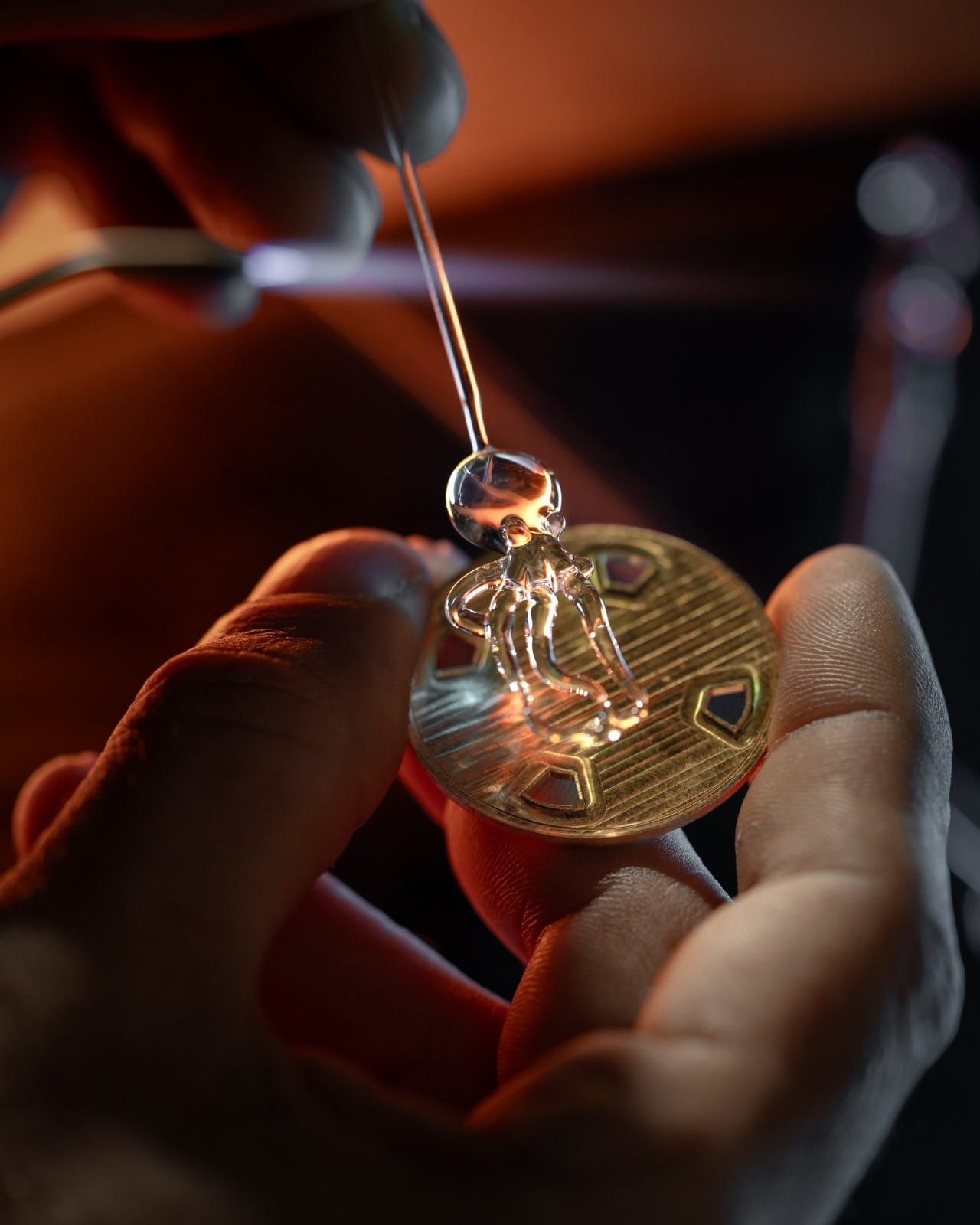
- Glassoctopus — a hand-formed, 3.5mm-tall glass octopus, worked with nothing more exotic than low-temperature glass and a propane torch, set against an engine-turned 18k gold base finished in deep blue.
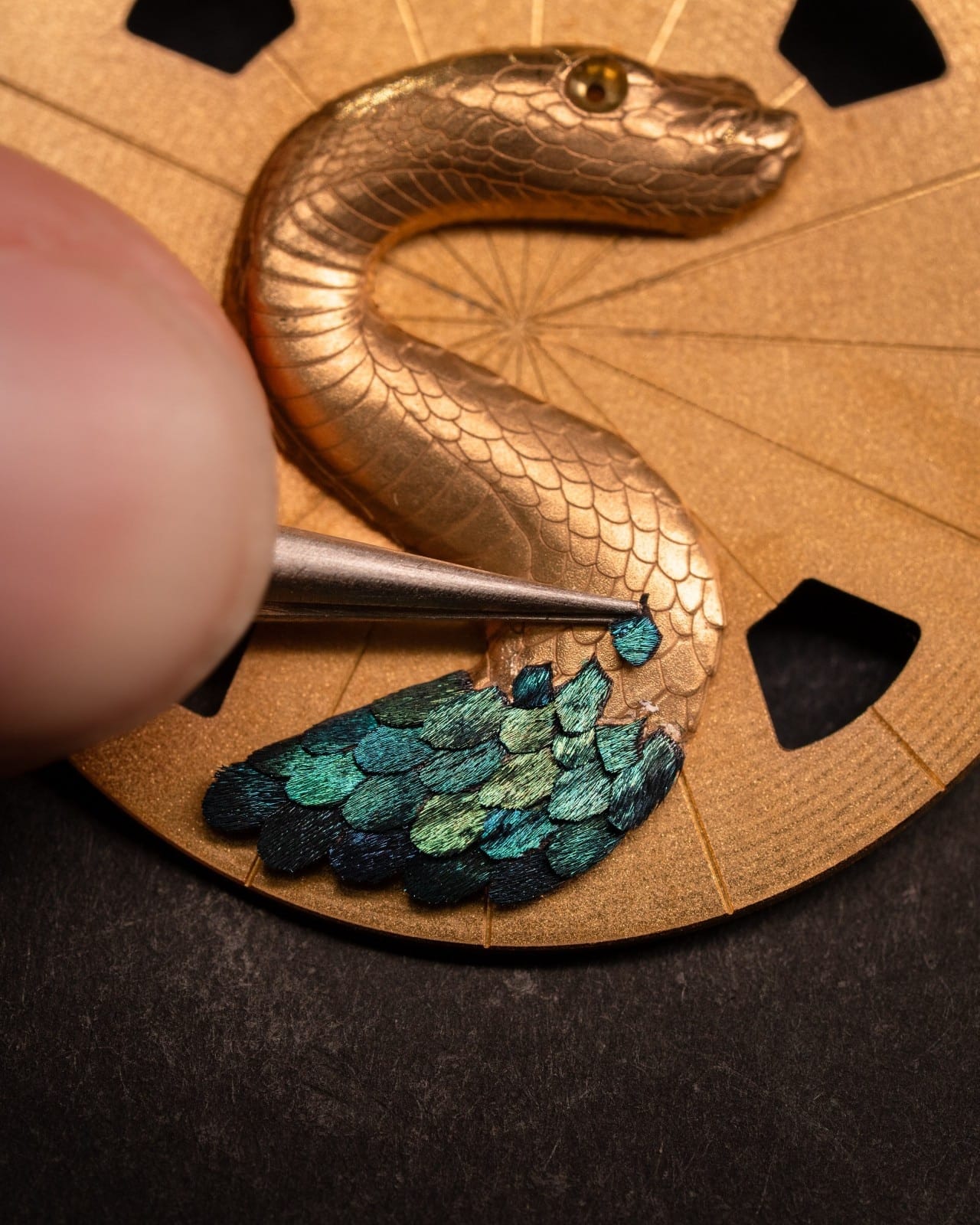
- Feathersnake — seven feathers from a male Himalayan monal, cut into roughly 200 pieces and set scale-by-scale onto a brass serpent form, finished with enameled gold eyes and a goose-feather surround.
- Woodenwings — Anna Le Corno builds a falcon from twelve wood species, combining circular marquetry, sculpted layered marquetry, and a feather-by-feather construction method she developed for this project.
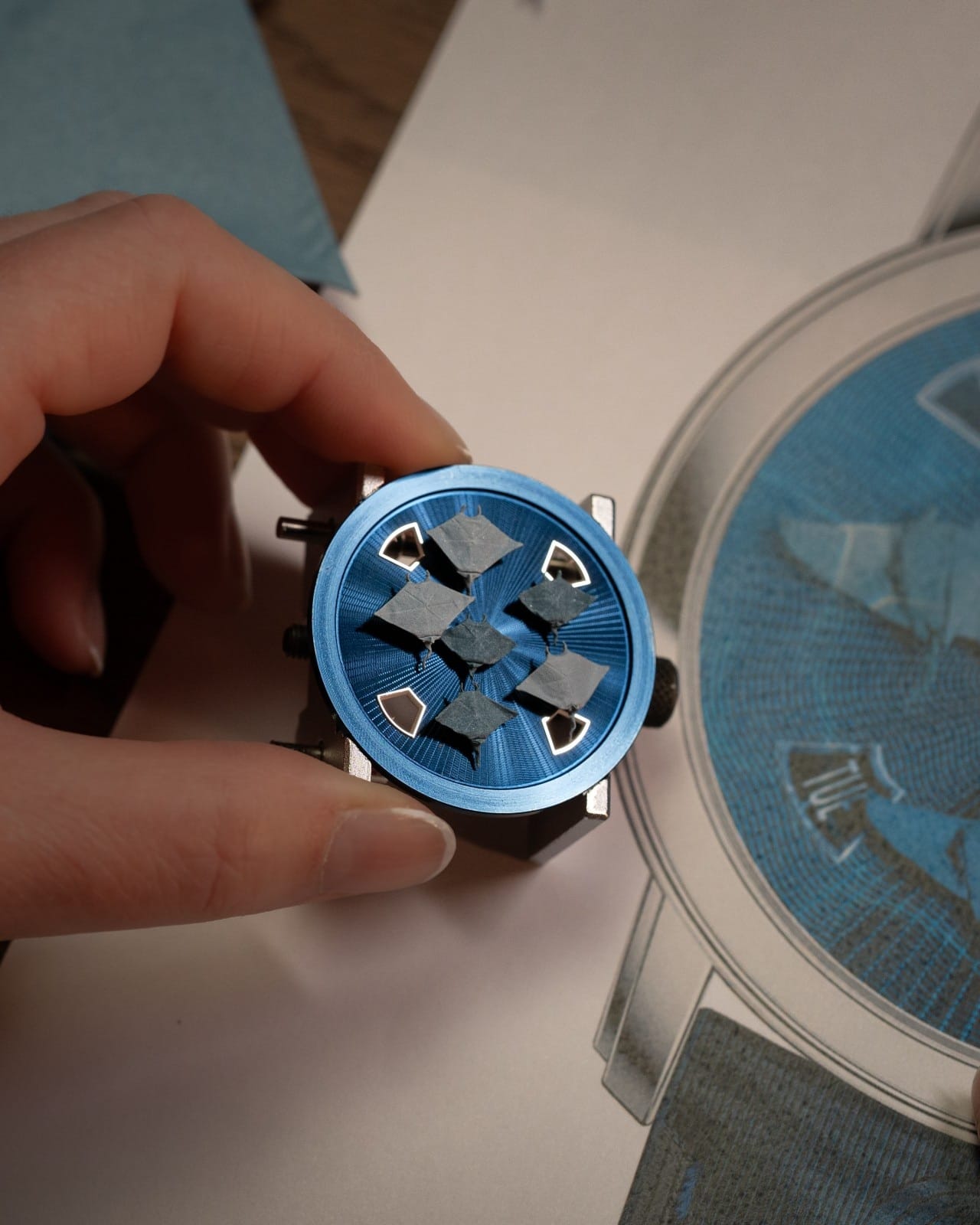
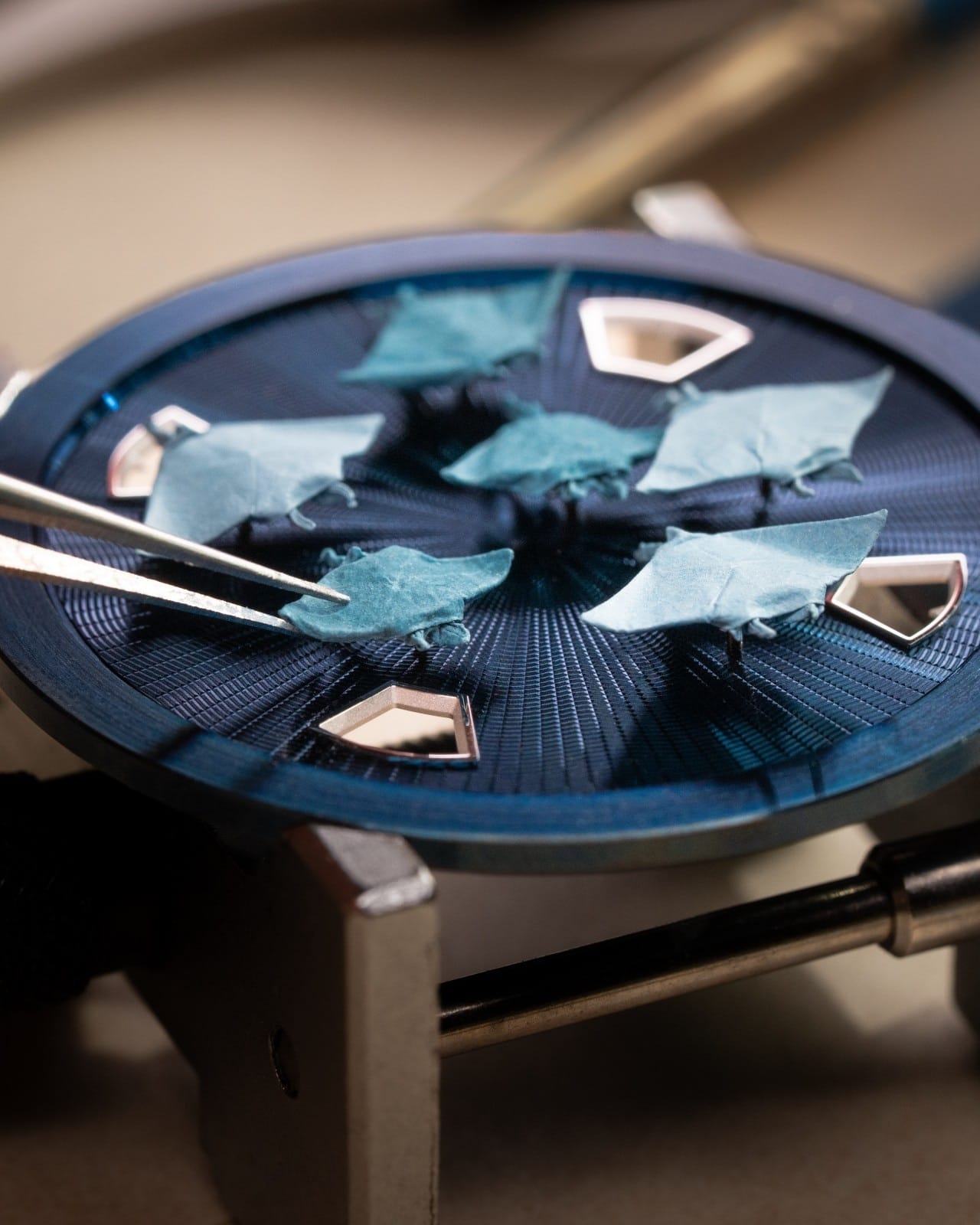
- Oraygami — Midori hand-folds manta rays as small as five millimeters from hand-dyed Japanese paper, using only fingers, fingernails, and the tip of a toothpick, suspended over a guilloché "ocean" beneath a moiré-tinted crystal. Two years in development.
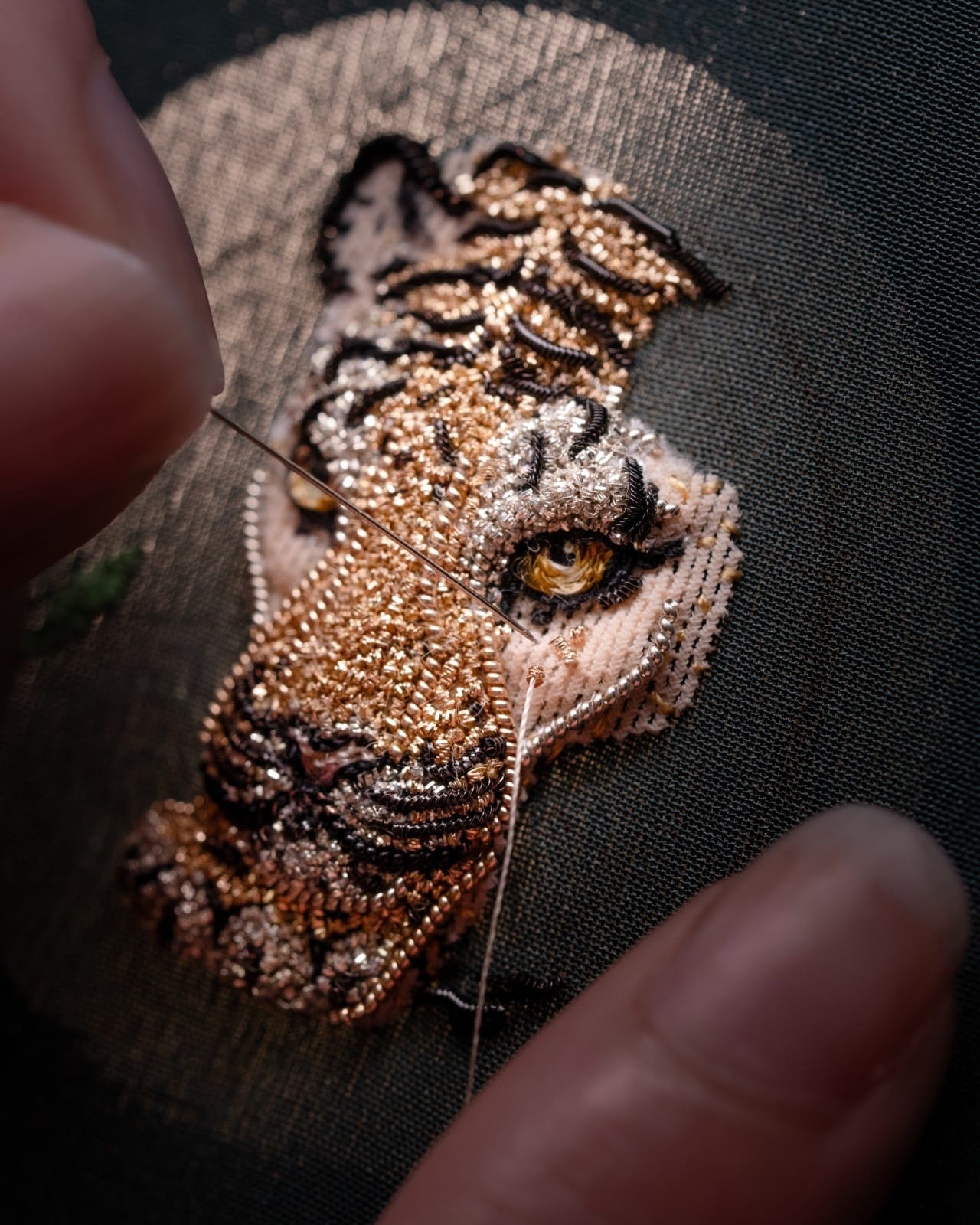
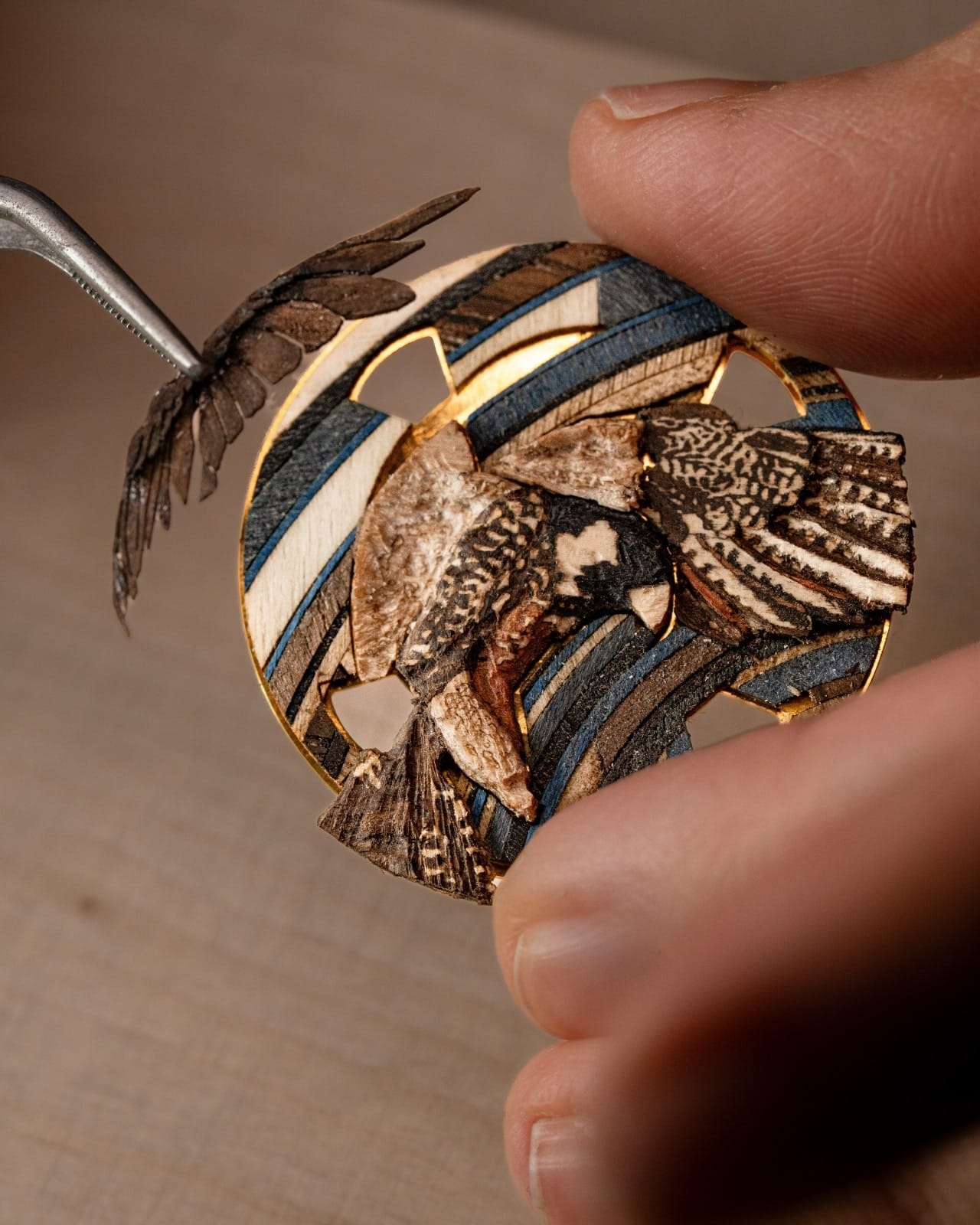
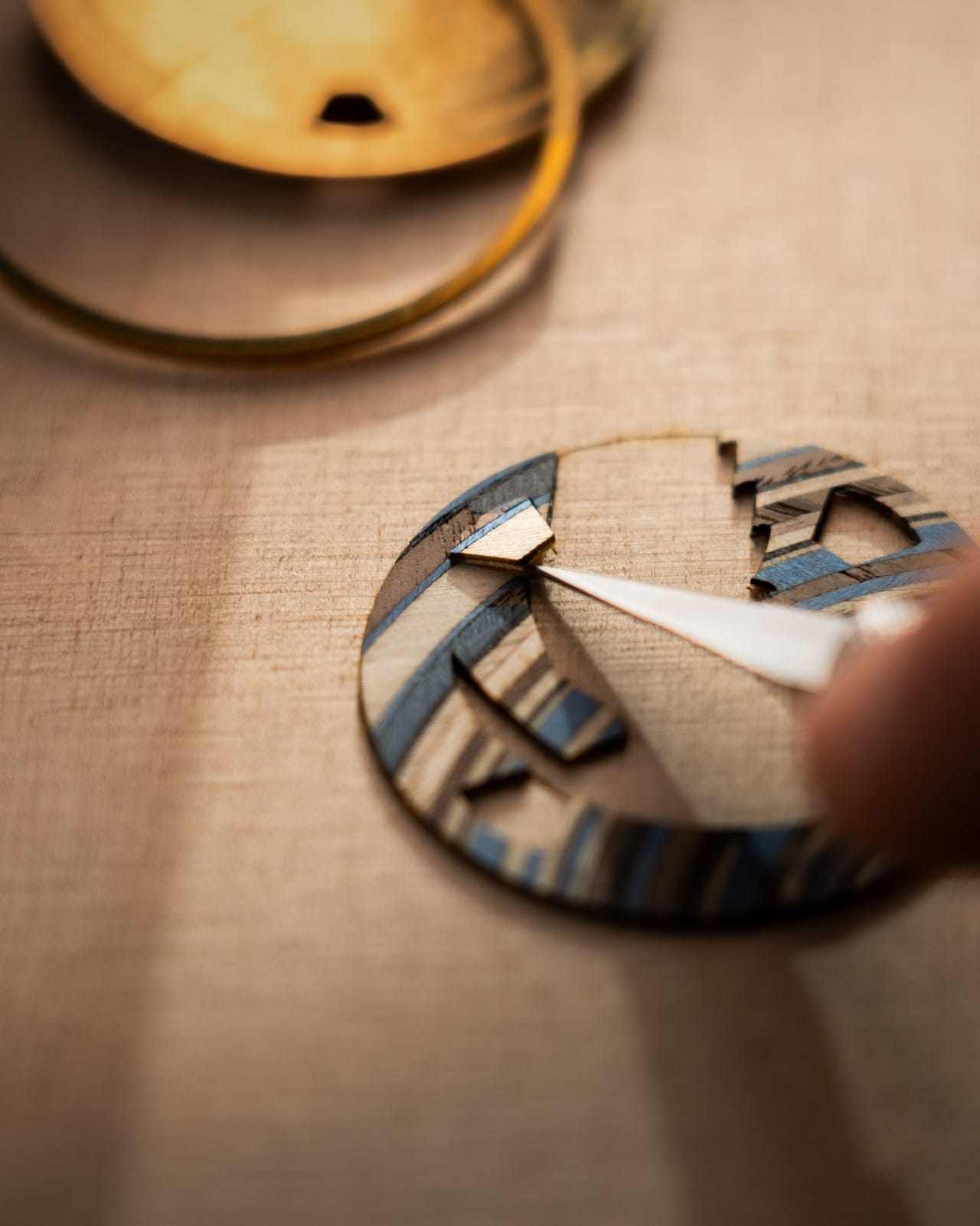
Source: Vacheron Constantin
All six share a case — 42mm, 18k white or pink gold, 12.9mm high — and the automatic Calibre 2460 G4, a movement Vacheron has built projects around since 2005 precisely because its four peripheral windows for hours, minutes, day, and date leave the entire dial free of hands and indices. The oscillating weight, in 22k gold, is hand-engraved with the tools each artisan used. These are one-off concept pieces — no production run, price on request, boutique-only — so the point here isn't acquisition. It's a statement of capability.
Where this sits next to Civilisations. It's worth putting Animal Kingdom next to the Maison's other big recent Métiers d'Art statement, Tribute to Great Civilisations, the Louvre collaboration that returned at Watches and Wonders this year with four new 15-piece references built around Egyptian, Assyrian, Greek, and Roman antiquities — three years in development, a full year of which went into historical research alone. That collection was genuinely sensational, and it runs on the same 2460 G4 platform and the same free-the-dial logic as this one. It also used a pretty specific language, one from classical antiquity, to fully appreciate the feel of a Lion de Darius on your wrist.
Animal Kingdom needs no glossary. Everyone knows what a tiger mid-stride looks like; nobody needs a curator's note to read a manta ray. That's not a knock on Civilisations — if anything it's the more historically serious of the two projects — but it does mean this collection's craftsmanship is legible to a far wider band of collectors than the last one. Vacheron's rare-crafts department has long been the most technically adventurous of the three Holy Trinity houses; this is the version of that adventurousness built to travel.
Fauna isn't new territory for the Maison, either — it's closer to a house theme that's been running quietly since the 19th century: an 1826 pocket watch (Ref. 10200) with an enameled, gem-set serpent, a 1910 jeweled scarab pendant watch (Ref. 10556) whose wings open onto the dial, a 1923 piece (Ref. 10222) using Chinese lacquer for a bird motif, a 1996 enameled snowy egret after Audubon (Ref. 11022), and the 2011 Métiers d'Art Univers Infinis series built around birds and tessellation. Animal Kingdom reads less like a departure than the most technically ambitious entry yet in a lineage that's been there all along.
On the reception. Trade coverage has been close to uniformly admiring — SJX in particular singled out Tigerbroidery as one of the strongest rare-crafts executions the Maison has produced, and having seen the close-up shots of how the gold thread is wrapped and colored, I don't think that's overstated. The more interesting friction showed up in collector-forum comments rather than the press coverage itself: alongside the admiration, there's a recognizable strain of skepticism about who actually wears something like this, and at least one commenter drew a direct line back to Vacheron's earlier Legend of the Chinese Zodiac dials. It's a fair comparison — both projects use figurative dial art built on the same G4 architecture — and I don't think the similarity is a weakness. If anything, it shows Vacheron treating this movement as a long-running canvas rather than reinventing the format every time it wants to showcase a craft.
My own read is straightforwardly favorable. This is exactly the kind of project that justifies Vacheron's seat at the Holy Trinity table — not the movement, which is two decades old and, fairly enough, a little tall for how thin these dials otherwise want to be, but the willingness to import genuinely foreign disciplines and force them through the discipline of an actual functioning watch. Six artisans who had never built anything smaller than a canvas, a garment, or a piece of furniture just proved their crafts survive a four-millimeter case gap without losing what makes them worth doing in the first place. That's a harder trick than it looks. And it's the kind of thing that, over time, makes a Maison's savoir-faire feel less like a museum piece and more like something collectors actually argue about — which, if Civilisations was the sensational chapter, is what makes Animal Kingdom the one that sticks even more.
Check out the collection by clicking here.