When the Crown Gets Curious: Inside Rolex's Perpetual Padellone
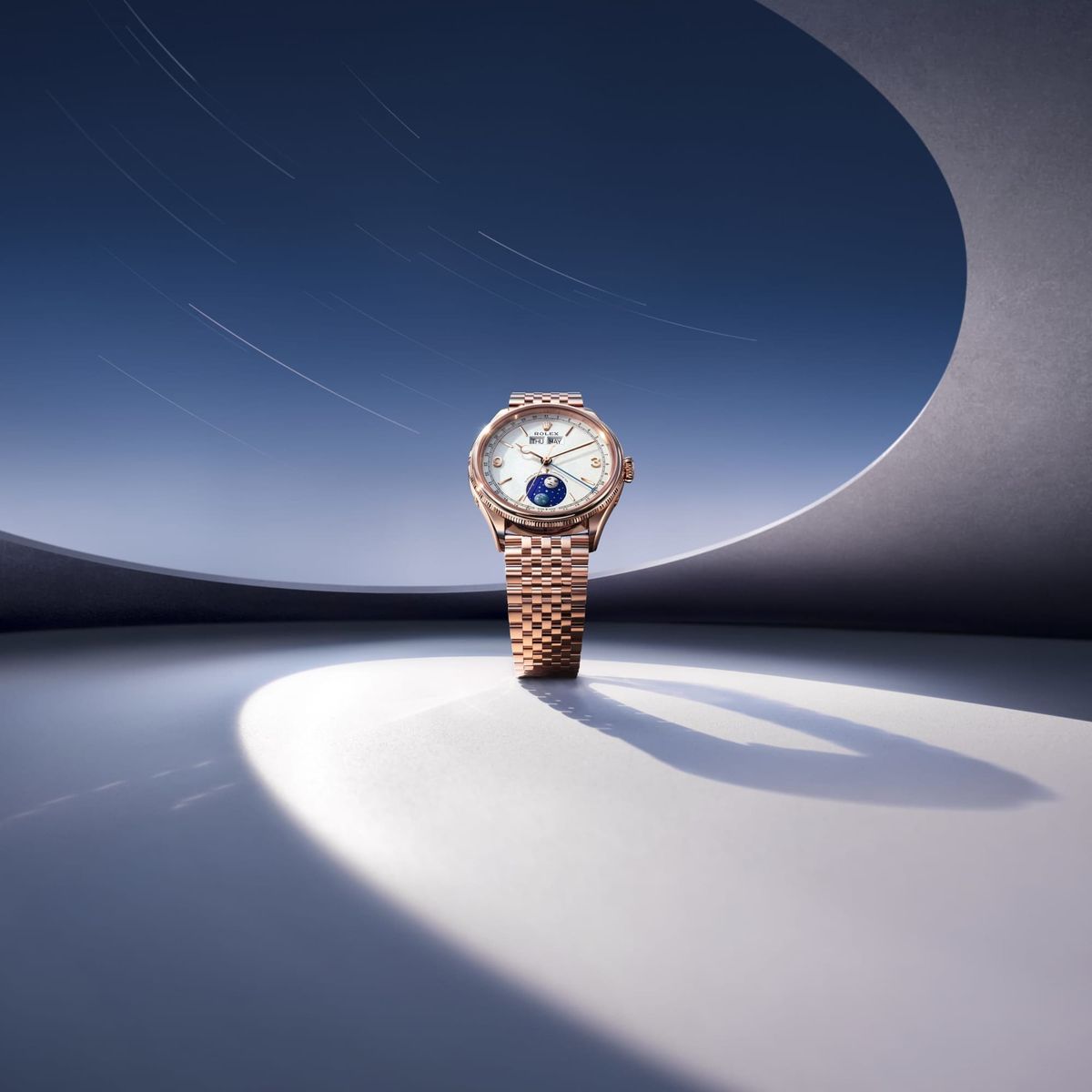
There's a version of this story I could write that's just spec-sheet stenography — case size, caliber number, price, done. But the Perpetual Padellone doesn't deserve that treatment, and honestly, neither do you. This is the most interesting thing Rolex has done in years, and I want to talk about why.
Source: Rolex
The Watch Itself
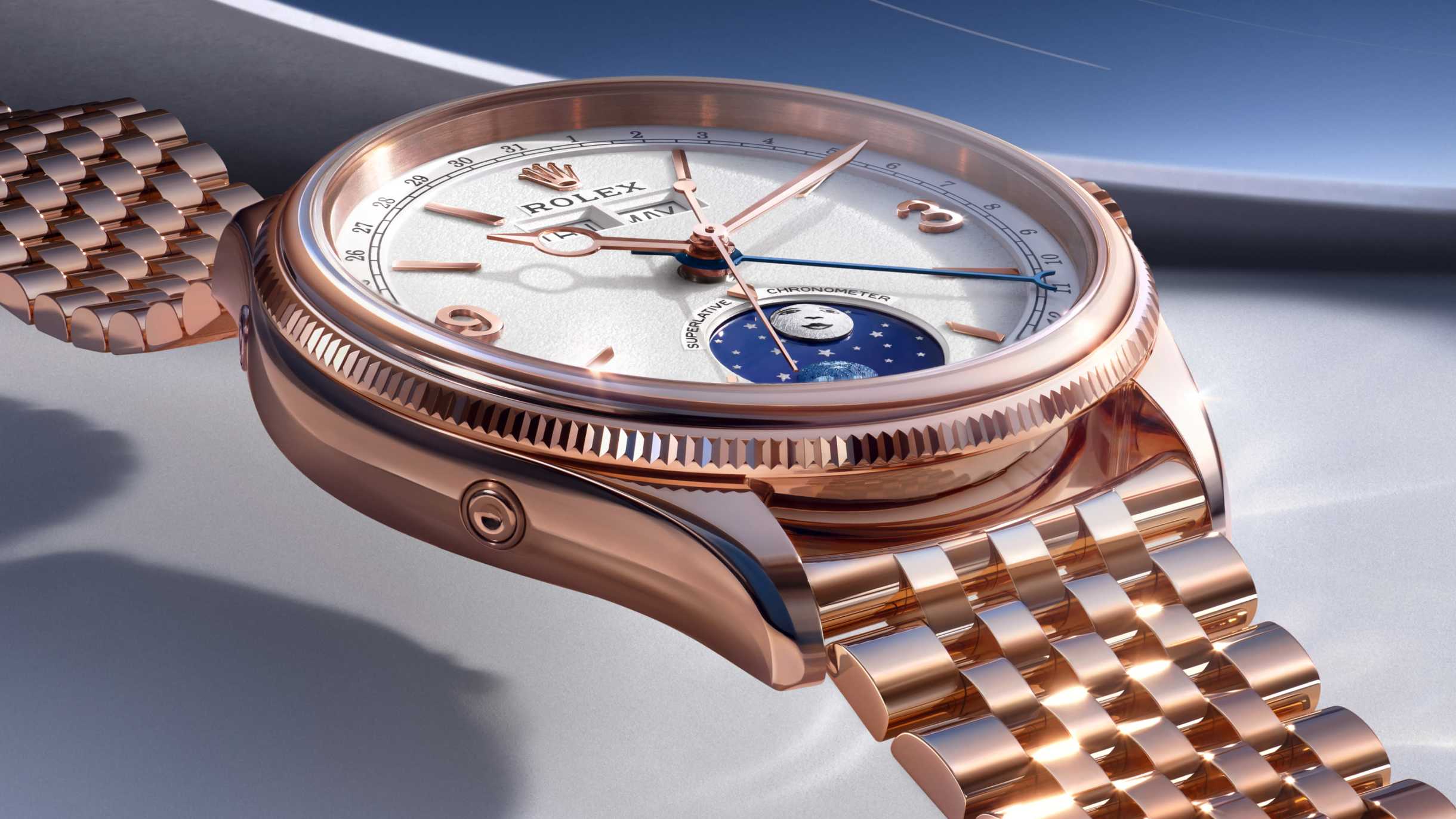
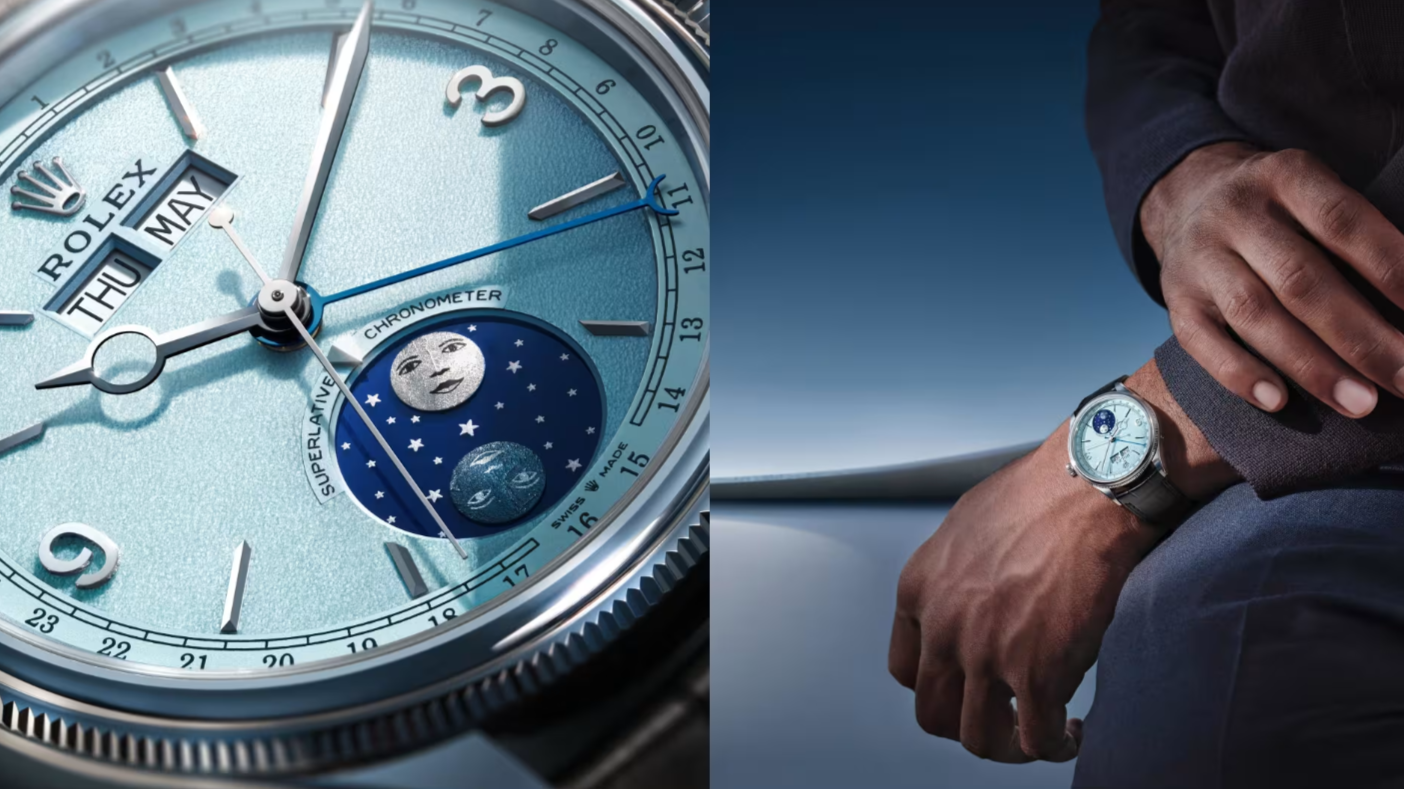
On September 15, 2026, in Milan of all places, Rolex added an unexpected complication to its Perpetual collection with the new Perpetual Padellone, taking its name from the vintage reference 8171 and combining a 39mm case with an annual calendar and moonphase display. That location wasn't an accident — "Padellone" is an Italian nickname, and it's no coincidence the watch was launched in the city where collectors coined it decades ago.
The Movement That's Doing All the Talking
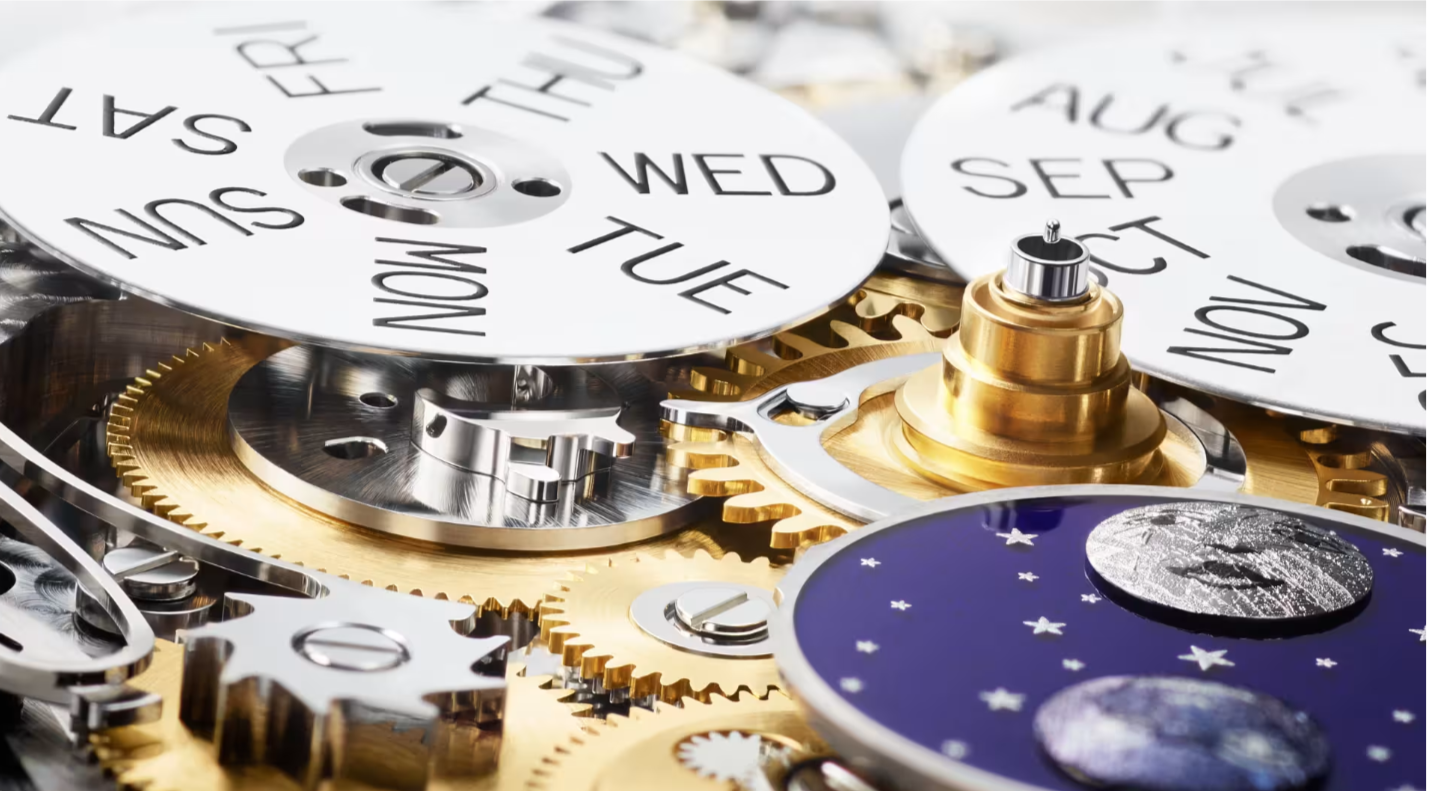
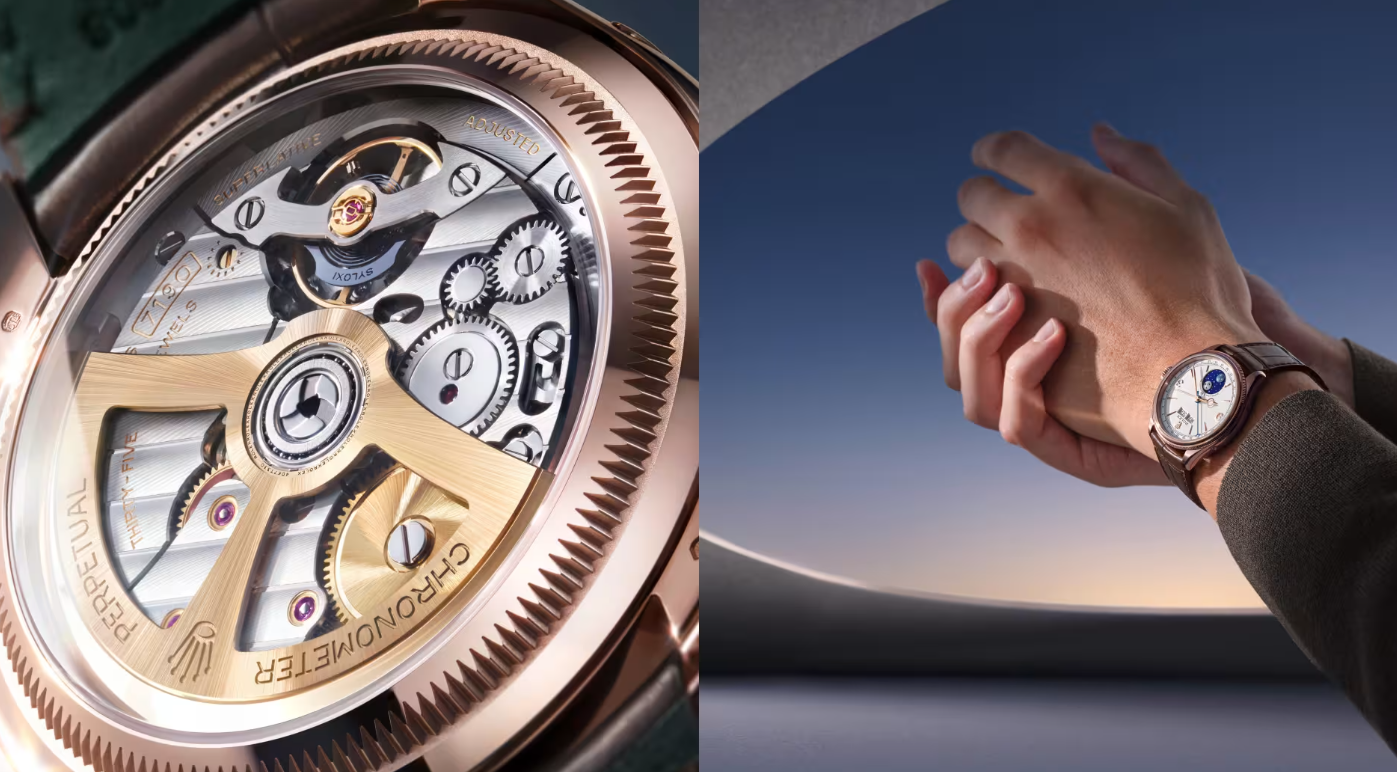
The watch runs on a new in-house movement, and this is where it gets genuinely technical. The Padellone is powered by Caliber 7190, based on the same caliber found in the Land-Dweller, and it shares the Land-Dweller's high-beat base movement with a novel double-wheel Dynapulse escapement, roughly 30% more energy efficient than a conventional Swiss lever escapement. On top of that, it operates at 5Hz with a 66-hour power reserve, uses Rolex's Syloxi silicon hairspring, and meets Superlative Chronometer standards for +/-2 seconds per day accuracy.
The calendar mechanism itself is the real party trick. Thanks to the patented Haplos system, the movement differentiates between 30- and 31-day months, meaning it needs only one manual correction per year, at the February-to-March transition. And it's instantaneous — at midnight, the day, date, and month all change simultaneously in a fraction of a second, keeping the calendar markers in perfect alignment. That's a mechanical flex most brands charging triple the price can't pull off cleanly.
Source: Rolex
Case, Dial, and the Numbers
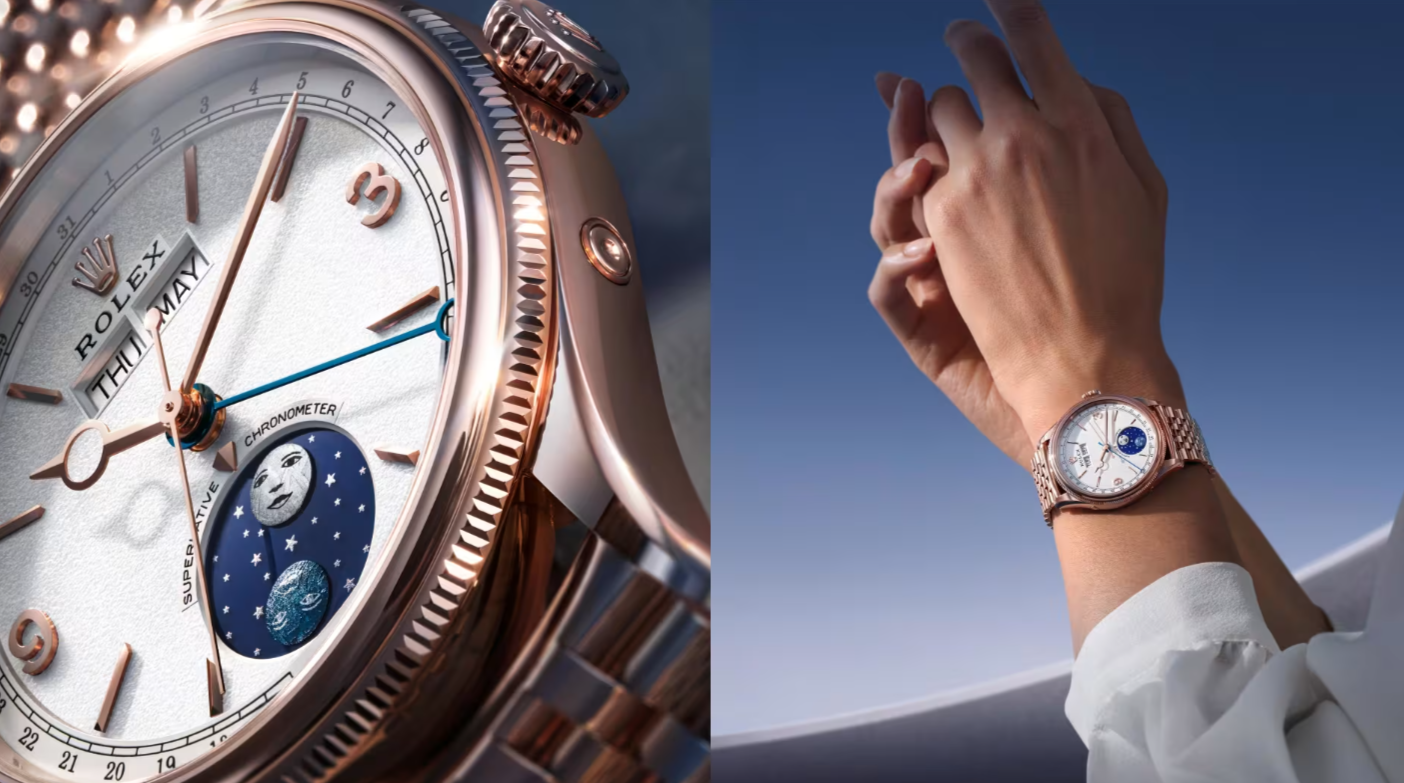
On dimensions and materials: the case measures 39mm by 12.2mm, comes in either Everose gold (ref. 53505) or platinum (ref. 53506), and — notably — skips Rolex's signature Oyster case entirely, which is why "Oyster" doesn't appear in the name. Rolex is currently selling three configurations. The first pairs Everose gold with an intense white dial and a Settimo bracelet, while the platinum version comes with an ice-blue dial exclusively on a black leather strap. Pricing, per Robb Report's reporting, lands at $59,000 for Everose on leather, $72,000 for Everose on the Settimo bracelet, and $66,200 for platinum on leather.
One clarification worth making because it trips people up constantly: despite the name, this is not technically a perpetual calendar. "Perpetual" here refers to the watch's self-winding capability — a technology Rolex was the first to perfect at scale nearly a century ago — while the Padellone itself is an annual calendar, since its month disc is only programmed for 30- and 31-day months.
A Nickname Rolex Finally Made Official
This is the second watch in a very small, deliberate club. The Padellone is only the second model to join Rolex's Perpetual collection, which began with the Perpetual 1908 in 2023, and like the 1908, it puts unusual emphasis on the movement itself, visible through a transparent case back.
And the "why now" answer is almost entirely about collector culture feeding back into corporate decision-making, which is rare for a brand this size. The original reference 8171 was a rare complication that Rolex made for only a few years in the late 1940s and early 1950s, in very small numbers, and circa-1950 examples have sold for CHF 508,000, with a stainless-steel piece bringing $635,000 in 2025. That's not a rounding error of an auction result — that's a watch the market has quietly decided matters. Rolex adopting the collector-coined nickname as the official model name is, as more than one outlet has pointed out, something the brand almost never does.
How the Watch World Is Reacting
The trade press reaction has been unusually unified, and it's worth separating the layers, because they're saying different things.
The horology crowd is thrilled. The framing I keep seeing, and the one I most agree with, is that this isn't Rolex playing it safe. One watch outlet put it bluntly: this is Rolex doing horology rather than putting out another Submariner colorway or a Daytona dial that gets an Instagram nickname — real engineering, not a marketing refresh. SJX, which tends to be the most technically skeptical outlet in the room, called it a handsome watch, with the movement itself being latest-generation despite a few aesthetic details, like the centre seconds hand, that feel slightly out of place against the vintage-inspired design. That's about as close to unqualified praise as SJX gets.
The market-watchers are being cautious but bullish. WatchGuys, writing for people who actually deal vintage Rolex day to day, made a point I think is smart and underappreciated: the new Padellone won't make original 8171s cheaper, and it's unlikely to make them dramatically more expensive either — renewed attention on a reference with roughly a thousand surviving examples mostly just produces more aggressive asking prices and more redialed watches hitting the market. That's a useful reality check against the instinct to assume every heritage reissue instantly torches vintage values in either direction.
On availability, everyone agrees: don't expect to walk into an AD and buy one. The Padellone is a regular production model, not a stated limited edition, but availability is expected to be extremely limited initially — Hodinkee's own reporting notes that deliveries of the 1908 ramped up slowly, which is probably the right reference point here. Practically, that means the first pieces will likely go to larger boutiques and existing clients with strong purchase histories, rather than being spread evenly across dealers.
Where I Land
Here's where I land, and I'll be direct about it: I think this is the best kind of Rolex release, precisely because it isn't trying to be an easy win.
What gets me is the Haplos annual-calendar solution. Everyone in the complicated-watch world loves to talk about "instantaneous" perpetual calendars from the big three complication houses, usually at prices that start where the Padellone's top configuration ends. Rolex took a genuinely clever, patent-worthy shortcut — an annual calendar that only needs one correction a year and still changes everything instantaneously at midnight — and built it with two additional components, not a redesigned movement architecture. That's Rolex doing what Rolex does best: not inventing complexity for its own sake, but engineering around complexity until it disappears into reliability. The Dynapulse escapement carried over from the Land-Dweller reinforces that this isn't a one-off flex; it's Rolex quietly building a shared high-beat platform across its dressier lines, which tells me this movement family has a future beyond just this watch.
The design choice I find most compelling, though, isn't the dial — it's the Settimo bracelet. Rolex has spent decades letting Oyster and Jubilee define its entire visual vocabulary. Watching them commit to a genuinely jewelry-adjacent, seven-link bracelet on a serious in-house complication feels like the brand finally admitting that "dressy" doesn't have to mean "compromise." On leather, the Padellone reads as cerebral and restrained; on the Settimo, it becomes something closer to architecture on the wrist. That range, from one case, is rare.
Bottom line: this is Rolex spending real engineering capital on a watch that will sell in the thousands, not the hundreds of thousands, and that's a statement in itself. It's not trying to be a hype piece. It's trying to be a legitimately serious complicated watch that happens to also be a Rolex — and on that measure, thirty patent applications deep, it succeeds.